Monday, 31 December 2012

Why Black Men Tend To Be Fashion Kings

Tell Me More intern Azmi Abusam is dressed in designs by Guess, Aldo and H&M. He got his handmade leather bag from a street dealer in Khartoum, Sudan. Abusam says his style changes every six months, but it's usually based on comfort, quality and personal taste. Hide caption Tell Me More intern Azmi Abusam is dressed in designs by Guess, Aldo and H&M. He got his handmade leather bag from a street dealer in Khartoum, Sudan. Abusam says his style changes every six months, but it's usually based on comfort, quality and personal taste. NPR Washington Desk Assistant Editor Brakkton Booker. Hide caption NPR Washington Desk Assistant Editor Brakkton Booker. NPR Digital Media's Matt Thompson shows off a plum-colored Express shirt with a lavender DKNY silk tie, charcoal wool vest by Indochino and wool pants by Calvin Klein. He says he keeps things simple for the most part, usually wearing muted colors with one bold accent. Hide caption NPR Digital Media's Matt Thompson shows off a plum-colored Express shirt with a lavender DKNY silk tie, charcoal wool vest by Indochino and wool pants by Calvin Klein. He says he keeps things simple for the most part, usually wearing muted colors with one bold accent. Tell Me More's Barbershop guy Jimi Izrael wears a Kenneth Cole shirt, Inc jacket and Ray Ban glasses. He says he mostly has his wife's taste in clothes, but also likes unconventional takes on conventional clothing items. Hide caption Tell Me More's Barbershop guy Jimi Izrael wears a Kenneth Cole shirt, Inc jacket and Ray Ban glasses. He says he mostly has his wife's taste in clothes, but also likes unconventional takes on conventional clothing items. Hide caption Kevin Langley of NPR's Operations team dresses in a navy blue pin-striped Calvin Klein suit. Made of cashmere, wool and polyester, the suit has an athletic fit. Langley says his overall style is "business attire," and he's drawn to ties that look expensive and professional, but are cheap and accentuate his shirt or suit. Republican strategist Ron Christie wears a tailored three-piece suit from Lord Willy's in New York City. He says the style is bespoke British with irreverent flair. And when Christie isn't dressed for business, he turns to casual Lucky Brand jeans and a sweater. Hide caption Republican strategist Ron Christie wears a tailored three-piece suit from Lord Willy's in New York City. He says the style is bespoke British with irreverent flair. And when Christie isn't dressed for business, he turns to casual Lucky Brand jeans and a sweater. Hide caption Victor Holliday, associate producer of NPR's on-air fundraising, wears a light gray wool suit (DKNY Essentials) under a black vintage overcoat with fine English stitching (Regis Rex). He considers his style "easy elegance." Hide caption NPR Senior Producer Walter Watson pairs his blue Banana Republic sweater with golden brown Lands' End slacks. He calls his style "nothing too fancy office casual wear." Tell Me More's Barbershop and political chat contributor Corey Ealons is outfitted in a Joseph Abboud black velvet jacket with a ticket pocket and pink silk handkerchief. Ealons says real men can wear pink with confidence, and that his style is classic and clean with a little edge. Hide caption Tell Me More's Barbershop and political chat contributor Corey Ealons is outfitted in a Joseph Abboud black velvet jacket with a ticket pocket and pink silk handkerchief. Ealons says real men can wear pink with confidence, and that his style is classic and clean with a little edge. Maxwell Ealons, 4, enjoys dressing like his father, Corey. His dressy clothes usually come from Children's Place, H&M, Target and Zara. He actually dresses himself for school with Spider-Man, Batman and Redskins shirts, plus jeans or sweat pants. Hide caption Maxwell Ealons, 4, enjoys dressing like his father, Corey. His dressy clothes usually come from Children's Place, H&M, Target and Zara. He actually dresses himself for school with Spider-Man, Batman and Redskins shirts, plus jeans or sweat pants.

For many, style is much deeper than articles of clothing; it's a statement of identity. Black men have a unique relationship with fashion, one that can be traced all the way back to the 17th and 18th centuries.

Monica L. Miller, the author of Slaves to Fashion: Black Dandyism and the Styling of Black Diasporic Identity, spoke with Tell Me More's Michel Martin about the past, present and future of black men's fashion.

Miller, an associate professor of English at Barnard College, explains that African-American men have used style as a way to challenge stereotypes about who they are. "Sometimes the well-dressed black man coming down the street is asking you to look and think."

Victor Holliday, associate producer of on-air fundraising at NPR and one of the resident kings of style, tells Martin that he learned about the importance of fashion at an early age. "When I was 5 years old, I knew exactly how I was going to look," he says. "And that was the year I got my first trench coat and my top hat."

Holliday's style icon is his father, who taught him that the main object of dressing up is winning respect. "Because as you present yourself seriously, people tend to take you seriously."

Holliday is one of the men featured in Tell Me More's Kings of Style slideshow.


View the original article here

Diana Vreeland's Rise To 'Empress Of Fashion'

Diana Vreeland had a troubled childhood; her mother often told her she was ugly. But she later became editor-in-chief of American Vogue and one of the country's most revered fashion icons. Her life is captured in the new biography, Empress of Fashion: A Life of Diana Vreeland. Host Michel Martin talks with author Amanda Mackenzie Stuart.


View the original article here

A Dangerous World Of Hackers And Ninjas

Neuromancer

Nick Harkaway is the author of Angelmaker.

The moment I opened the book, I was snared by the now-iconic first line: "The sky above the port was the color of television, tuned to a dead channel." I knew that color; the U.K. had only four TV channels and they didn't broadcast through the night. When nothing was on, the cathode ray screen was a kind of numinous anthracite, the closest thing it could manage to black. If you want to be clever about it — at the time it was a comparison way beyond me — you could call it "darkness visible." Neuromancer lives in that space: It is contradiction, bifurcation, penumbra.

The protagonist, Case, is a burnout. He was a hacker, but he crossed the wrong people, and they crippled his nervous system so that he could no longer work with cyberspace (Gibson made up the word; this book heavily influenced how people imagine data online). Case is living on his luck, and that luck is running out; he's been to the best doctors and they can't fix him, so he's a middleman now, brokering deals for drugs and illegal software.

Until Molly comes along, and her boss, Armitage, offering a deal: Make a run in cyberspace, a really major hack. He'll get cured, get paid. Sweet deal. But in the grand tradition of crime thrillers, the job is more complicated than it seems, and Case is going to be crossing some dangerous people and some very thick red lines.

Despite the breakneck urgency of the action, the hard-boiled story drips with laconic cool. I had never met that before: Hammett, Chandler and Elmore Leonard came later for me. Neuromancer introduced a demimonde of back alleys, sodium streetlamps and the kind of club where you can buy firearms with your whiskey. It whispered of transgression, of sex and booze, and license.

Nick Harkaway is also the author of The Gone-Away World.

Nick Harkaway is also the author of The Gone-Away World.

Courtesy of Rory Lindsay

The other fictions that framed my world were basically benign. I'd seen Tron and loved it. I was a Star Wars fan. I liked hobbits and the Three Musketeers. But Han Solo wouldn't last 10 minutes in Night City; Frodo would be hooked on a drug with a seven-syllable name inside of an hour. This was a world between the primary color fictions I'd seen and the dangerous nuclear age reality I lived in: In the 1980s it was pretty much established that Britain would burn in the first exchanges of a war between NATO and the Warsaw Pact.

Inevitably, I fell for Molly, the street samurai with mirrors over her eyes and razors in her fingers. In my mind she had a husky, Lauren Bacall voice made from coffee and cigarettes — and I was right. If Bacall's character from To Have and Have Not taught English to Michelle Yeoh's martial artist from Crouching Tiger, Hidden Dragon, you'd get someone like Molly.

Even now, she's a rarity. More often than not, Molly is what's missing from contemporary stories of any sort: a woman who is complete unto herself. She didn't need a male senior partner. In fact, she was more connected and streetwise than Case, and more alert to the danger they were both in. Wherever she went, Molly was in charge. In 1985, you could look a long time without finding that anywhere else.

And in a middle-class British school, you could go even longer without hearing the name Marcus Garvey, the Pan-African and black nationalist political leader who influenced Martin Luther King, Haile Selassie and Malcolm X — and the orbit-dwelling Rastafari nation Case and the others encounter in their search for answers. A decade before Google, I had to look Garvey up in the encyclopedia.

Add that to ninjas, amphetamines, extreme body modification, catsuits, gangs, governmental misdeeds, high decadence, Strangelove-esque soldiers and psychotic computers: Neuromancer was and is a treasure house of dangerous ideas.

And yet at the same time, it is secretly a very gentle book. Amid all the grime and grim, it's not hard to know where to put your sympathy or your trust. The bad are bad, the good are good. So despite all this, it's not an unsuitable book for a kid, just a challenging and eye-opening one. And unlike so many improving and notionally educational books, it's stylish, adult, exciting and fun. It's a door to a greater world.

PG-13 is produced and edited by the team at NPR Books.


View the original article here

Green Grapes And Red Underwear: A Spanish New Year's Eve

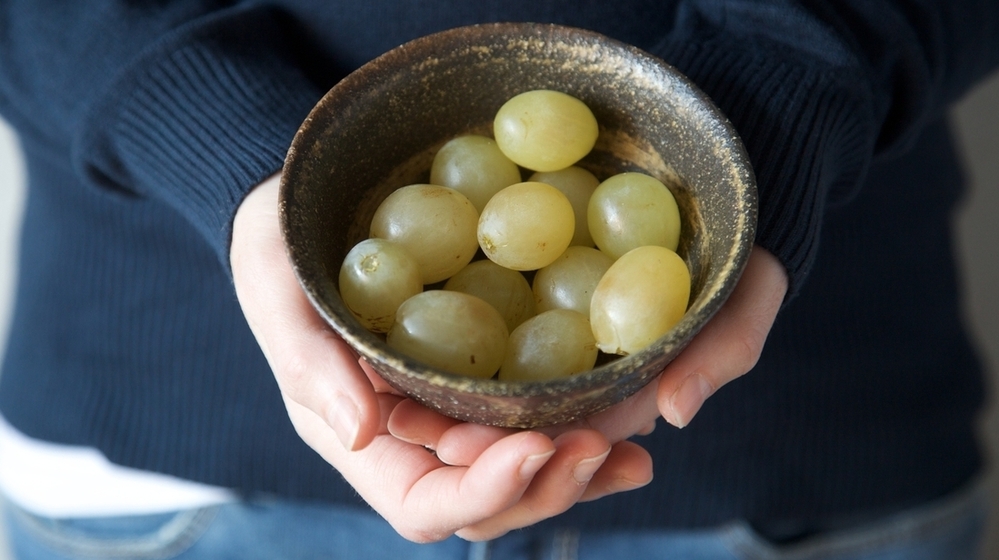
Ringing in the New Year in Spain requires eating a dozen grapes and wearing a very specific kind of undergarment.

Jeff Koehler Ringing in the New Year in Spain requires eating a dozen grapes and wearing a very specific kind of undergarment. Ringing in the New Year in Spain requires eating a dozen grapes and wearing a very specific kind of undergarment.

Jeff Koehler

If the thought of watching the ball drop in Times Square again is already making you yawn, consider perking your New Year's Eve celebration with this tradition from Spain: As midnight nears on Nochevieja, or "old night," the last day of the year, the entire country gathers in front of television screens or in town squares, clutching a small bowl of green grapes and wearing red underwear. More on the underwear later.

The camera of the main national TV channel focuses on the clock tower of the 18th-century Real Casa de Correos in Madrid's Puerta del Sol while a pair of announcers in formal wear, high above the thousands of revelers packed into the chilly plaza below, quickly repeat instructions one last time. After the bells ring out four times in quick succession — "Wait, wait, ignore those!" — there is a slight pause and then begins a series of 12 chimes — one for each month.

At that first dong, Spaniards from Barcelona to Bilbao to Cadiz pop a grape into their mouths. There is little time to chew and swallow, much less savor, because about two seconds later there is a second dong and a second grape gets popped into the mouth. And on through 12 dongs and las doce uvas de la suerte ("the 12 lucky grapes").

If you eat all 12 by the end of the final bell's toll — and that doesn't mean finishing with a half-chewed mouthful — then you will have good luck in el año nuevo (the new year).

This popular tradition is a century or so old, though its exact origins remain debatable. One oft-repeated story says that growers in Alicante had a bumper 1909 harvest and found a creative way to sell off their surplus.

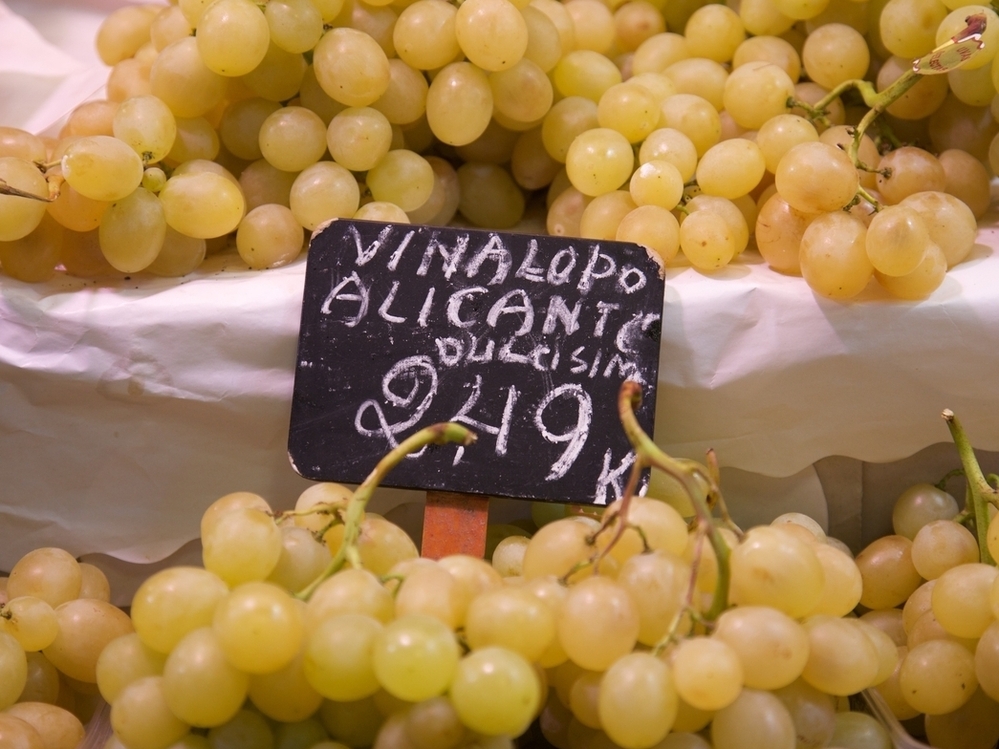
The traditional variety of grape consumed at the start of the new year is called Aledo. The grapes mature late are not harvested until November and December.

Jeff Koehler The traditional variety of grape consumed at the start of the new year is called Aledo. The grapes mature late are not harvested until November and December. The traditional variety of grape consumed at the start of the new year is called Aledo. The grapes mature late are not harvested until November and December.

Jeff Koehler

Recently, though, old newspaper articles have been republished that show the tradition began decades earlier, in the 1880s. These stories tell of bourgeoisie in Madrid copying the French tradition of having grapes and champagne on the last day of the year. Before long this custom had been adopted by certain madrileños who went to Puerta del Sol to see the bells chime at the turning of the year and, most likely in an ironic or mocking manner, to eat grapes like the upper class.

About 80 percent of the "lucky grapes" come from the valley of Vinalopó in central Alicante, on Spain's Mediterranean coast. Fleshy, deliciously sweet, and pale, almost whitish-green in color, they are a traditional Spanish variety called Aledo that, maturing late, are not harvested until November and December.

But these are no ordinary grapes. Protected by Denominación de Origen (designation of origin, or D.O.) status, budding clusters are wrapped in paper bags in June and July and kept covered as they ripen. This was first done in the late 19th century to protect them from a plague of cochylis vine moths. Growers found it also conserved the flavor, aroma and color of the grapes, and slowed their maturation.

According to the regulatory office for D.O., Uva de Mesa Embolsada Vinalopó, bagging the grapes also means that "they form a peel that's much finer by not having to fend off the aggressions of the rain, the sun or the wind."

When I went to Barcelona's iconic La Boqueria market to buy my grapes for this year's festivities, Maria, the seasoned stall owner of Frutas y Verduras E. Lafuente, told me that "having such a fine skin also makes them quicker to eat. There's less to swallow."

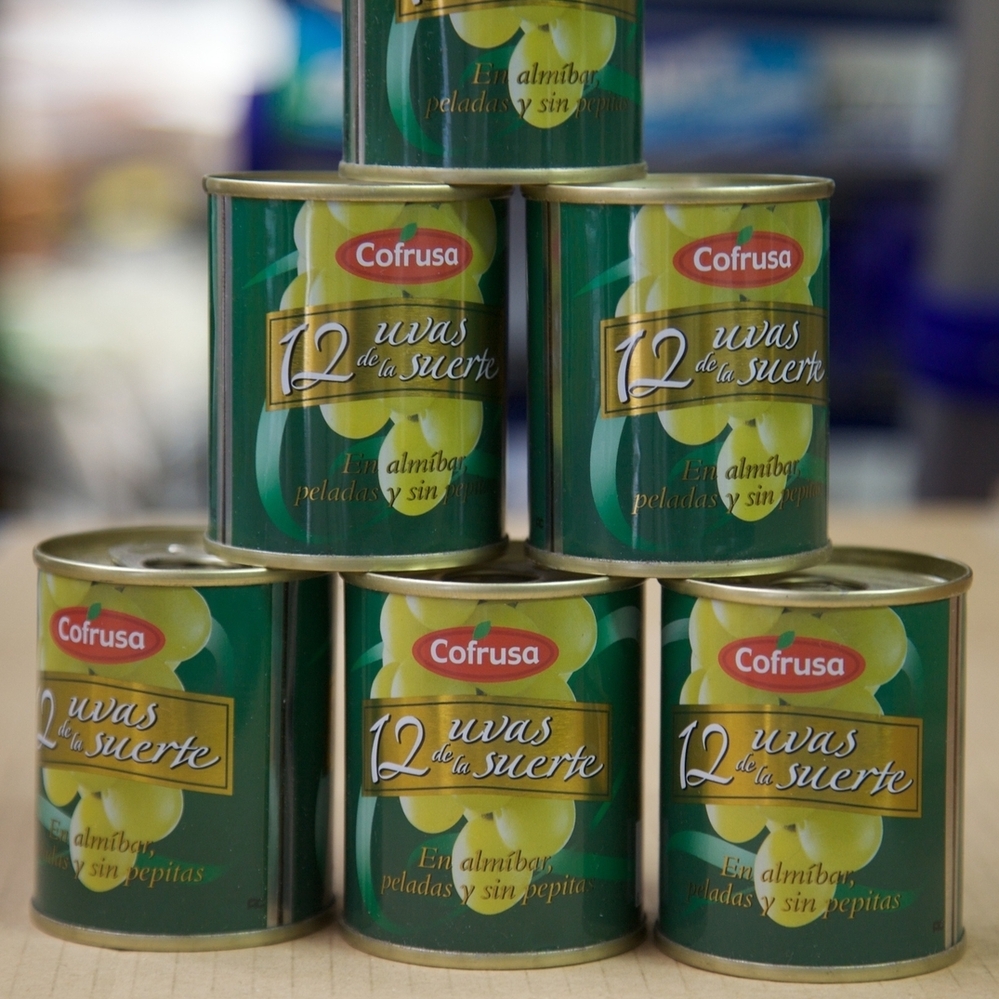
Supermarkets sell small tins of 12 seeded and peeled grapes.

Jeff Koehler Supermarkets sell small tins of 12 seeded and peeled grapes. Supermarkets sell small tins of 12 seeded and peeled grapes.

Jeff Koehler

And, with the bells impatiently tolling, that small detail makes a difference. It is no easy task eating grapes so quickly, especially when each has three or four seeds. (Seedless grapes are a rarity here, though some painstakingly remove the seeds beforehand. Ever more extreme — or modern — are the small tins of 12 seeded and peeled grapes now sold in supermarkets.) The only way to finish all 12 is to not chew, just take a solid bite and then swallow, pips and all.

Such a strategy is easier to plan than to execute, especially by grape number six or seven when, in my experience, the giggles kick in. After 15 years living in Spain, I have learned that the only way to finish all 12 is by concentrating on the chimes and ignoring the rest of the surrounding commotion.

If scoffing grapes at midnight isn't strange enough, convention says you must do so while wearing red ropa interior, or underwear — a bra, a sock, a garter, whatever. And — stranger yet — the undergarment should be given to you by someone else.

Maria, the stall owner, reminded me not to forget a third traditional lucky charm to accompany red underwear and grapes: drop a gold ring into my celebratory glass of cava (local champagne-style bubbly from Catalunya). "Just don't swallow it!" That would, no doubt, be a harbinger of bad luck.

When the 12 dongs finish and the last of the grapes has been swallowed, there are cheek kisses, toasts with glasses of cava, and pieces of turrón (almond and honey nougat from Alicante) passed around as the most expensive commercials of the year play on TV and phone lines jam with the crush of well-wishing calls.

In this year of acute economic hardship in Spain, many will hope that eating the grapes brings better luck in 2013, and try particularly hard to finish them all before the last chime fades to silence and the new year begins.

Jeff Koehler is the author of Morocco: A Culinary Journey With Recipes. His next cookbook, on Spain, will be published in 2013. Visit www.jeff-koehler.com or follow @koehlercooks.


View the original article here

Death Of The (Predatory) Salesman: These Days, It's A Buyer's Market

To Sell Is Human

The Surprising Truth About Moving Others

by Daniel H. Pink

Hardcover, 260 pages | purchase

close To Sell Is HumanThe Surprising Truth About Moving OthersDaniel H. Pink

The familiar image of the salesman in American culture hasn't always been a flattering one. Just think of Alec Baldwin as the verbally abusive "motivator" of two real estate salesmen in Glengarry Glen Ross.

Daniel H. Pink, author of the new book To Sell is Human, says that this relentless, predator-style approach to selling has become outdated. He believes that the art of sales has changed more in the past 10 years than it did in the previous century.

Pink joins NPR's David Greene to talk about the effect the Internet has had on selling and why he believes almost all American white-collar workers are now in sales.

On why the brutal, Glengarry Glen Ross style of selling has become outdated

"Well, most of what we know about sales was built for a world of information asymmetry — the seller always had more information than the buyer. Twenty years ago, when [David] Mamet wrote that play that [was] made into a movie, when you walked into a Chevy dealer, the Chevy dealer knew a heck of a lot more about cars than you ever could ... you didn't have the adequate information. And so this is why we have the principle of caveat emptor, buyer beware. You gotta beware when the other guy knows a lot more than you.

"Well, something curious has happened in the last 10 years in that you can walk into a car dealership with the invoice price of the car, something that even the salesmen/women at car dealers didn't know too long ago. And so in a world of information parity, or at least something close to it, we've moved — caveat emptor is still good advice, but equally good advice for the sellers is caveat venditor, seller beware."

On why he thinks "we're all in sales"

"There's an idea out there that salespeople have actually been obliterated by the Internet, which is just not supported by the facts. In 2000 ... about 1 in 9 American workers worked in sales. That is, their job was to convince someone else to buy something. So then, what's happened over the last 12 years? Explosion of new technologies. Today, 1 in 9 American workers works in sales. But I think what's interesting is that if you look at that other 8 in 9, they're in sales, too. That is, a huge percentage of what white-collar workers do on the job is what I call nonsales selling — persuading, influencing, convincing other people to part with resources. Pitching ideas in meetings, asking the boss for a raise, trying to raise money from investors. And so, at some level, we're all in sales now."

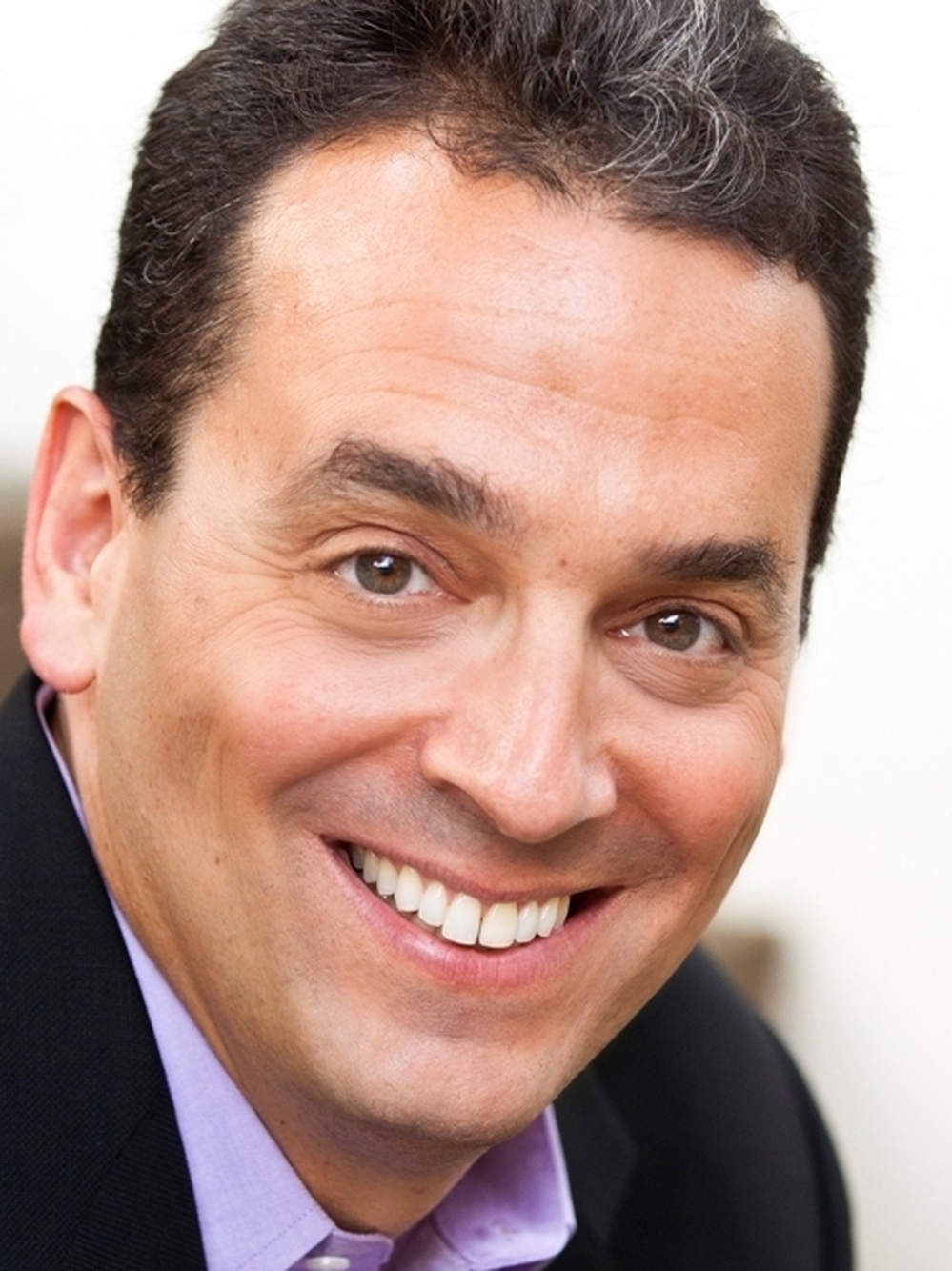
Daniel H. Pink is the author of five books about the changing world of work, including A Whole New Mind and Drive.

Rebecca Drobis/Courtesy of Riverhead Hardcover Daniel H. Pink is the author of five books about the changing world of work, including A Whole New Mind and Drive. Daniel H. Pink is the author of five books about the changing world of work, including A Whole New Mind and Drive.

Rebecca Drobis/Courtesy of Riverhead Hardcover

On why the best salespeople are "ambiverts," not extroverts

"We have this myth that extroverts are better salespeople. As a result, extroverts are more likely to enter sales; extroverts are more likely to get promoted in sales jobs. But if you look at the correlation between extroversion and actual sales performance — that is, how many times the cash register actually rings — the correlation's almost zero. It's really quite remarkable.

"Let's think about a spectrum, and say, on a scale from 1 to 7, where 1 is extremely introverted, 7 is extremely extroverted: The 6s and 7s — the people who get hired, the gregarious, backslapping types of the stereotype — they're not very good. OK, now, why? ... They're just spending too much time talking. ... They don't know when to shut up. They don't listen very well; they're not attuned to the other person; they sometimes can overwhelm people.

"Now ... does that mean that introverts are better? No. The 1s and 2s, they're not very good either. They often are not assertive enough. They're skittish about striking up conversations. What this new research — and it's very exciting, it's accepted for publication but actually not published yet — [says] is the people who do the best are what social psychologists call ambiverts. ... Not totally extroverted, not totally introverted. The 3s, 4s, and 5s. They know when to shut up; they know when to speak up. They know when to push; they know when to hold back. And so the best people at convincing, persuading others, whether in a traditional sales environment or in these other kinds of environments, are these ambiverts."

On the link between improvisational theater skills and selling

"One of the abilities that matters most is this ability of improvisation — that is, if your perfectly attuned, superclear pitch goes awry, as it will, how do you respond? And the principles of improvisational theater help us out on that, things like saying 'Yes, and' instead of 'Yes, but,' ... It's constructive rather than deconstructive.

"[In one improvisational exercise] I had to sit face-to-face with this actually pretty senior executive at a television network, and he had to tell me something that was bothering him, and I had to look him in the eye when he told me that, but I couldn't respond to him for 15 seconds. ... The idea ... is that we tend to move too quickly, and what the best salespeople of any kind know is that it's really about listening; it's really about understanding the other person's perspective, hearing what they're really saying, and one really profound way to do that is to slow down."


View the original article here

Author Ben Fountain's Book Picks For 2013

Thorne Anderson Ben Fountain is the author of Billy Lynn's Long Halftime Walk and the short story collection Brief Encounters With Che Guevara.

Last spring, weekends on All Things Considered spoke with author Ben Fountain just as he released his widely acclaimed first novel, Billy Lynn's Long Halftime Walk. Later in the year, it was nominated for the National Book Award.

We asked Fountain to share with us what he's looking forward to in the book world next year. He says he's read about 25 books for release in 2013 and tells host Jacki Lyden, "The state of American fiction is really strong, at least from where I'm standing."

"First and foremost it's a mother-and-son story. It's the story of a single mother whose son goes to the naval academy and ends up becoming a Navy Seal. It moves from a mother and son story to a war story ... A really wrenching, and unflinching, I would say, war story."

"It has a lot of the things that I am interested in - politics, power. The big external forces in our lives that play such a big role in our interior lives, and that intersection between the individual and the larger forces in the world. [The main character] Jacqueline, she's a refugee from the Liberian Civil War ... and she has lost literally everything except the clothes on her back — her family, her home. Basically what she has is her memories and her wits, and these memories, especially of her family, they sustain and torment her as she tries to survive ... So, you know, this book, the writing is extraordinary. When I say extraordinary, I don't mean it's pretty or gorgeous for gorgeousness sake. Maksik, he is really getting down deep into, you know, the nature of human experience and the nature of love, and the nature of loss. And line by line, the power accumulates in this book is kind of like a stealth tsunami."

A Curious Man

"We are talking about the guy who invented Ripley's Believe It or Not! I would say Robert Ripley is a true American original. He invented himself, and along the way invented huge chunks of American culture. He was right there at the beginning of cartooning, tabloid news ... So much of what we recognize as, you know, just the background of our lives and American culture — you know, sensationalism and celebrity news — Ripley was right there at the beginning of it. He built an entire entertainment conglomerate around himself. At one time he was, you know, an extremely wealthy man. He went all over the world in search of the exotic and the strange, and the weird, and he also had a pretty racy personal life. He had a harem long before Hugh Hefner ever thought of the Playboy Mansion."

Taking What I Like

"Linda Bamber is a professor of English at Tufts University in Boston, and most of the stories in the collection take off from various Shakespeare plays — Othello, and Antony and Cleopatra, Henry IV, As You Like It. And she takes them in these amazing directions. In one story, the heroine of As You Like It leaves her play and ends up dating all the three principle men of Henry IV. In another, the entire cast of Othello is now a college English department, and Desdemona is the chairman, and Othello is the only minority member, and Iago is in there as well, you know, making trouble as always ... I mean, I have never read anything quite like these stories. They have attitude, and they shake things up. They are playful, and inventive, and funny, and Bamber gets the entire world into each one of her stories."


View the original article here

Cheap Bubbly Or Expensive Sparkling Wine? Look To The Bubbles For Clues

The bubbles in champagne tickle the tongue and transfer wonderful aromas to the nose.

The bubbles in champagne tickle the tongue and transfer wonderful aromas to the nose.

iStockphoto.com

There's nothing like the distinctive "pop" of the uncorking of a bottle of bubbly to create a sense of celebration. Whether it's Dom Perignon or a $10 sparkling wine, bubbles add pizazz.

Sparkling-wine lovers sometimes point to the glittering streams of tiny bubbles as an important attribute. Why? Well, tiny bubbles are a sign of age, explains French chemist Gerard Liger-Belair, author of Uncorked: The Science of Champagne.

"Old champagnes always show tiny bubbles, mainly because they have aged several years and lost a significant amount of dissolved CO2, the gas that produces the bubbles," Liger-Belair told us in an email.

And what else can the bubbles tell you? Well, if the streams of bubbles remain down to the last sip, this can be a clue as to how it was produced.

If you listen to my story, you'll hear a tour with Fred Frank, third-generation winemaker at Chateau Frank, part of Dr. Konstantin Frank Vinifera Wine Cellars in the Finger Lakes region of New York state. Frank uses the traditional Champagne method to produce his sparkling wines. It's a labor- and time-intensive process whereby each bottle goes through a second fermentation in the bottle. "The benefit of this method is higher-quality sparkling wine," Frank says.

And one way that the sparkling wine produced in this method can distinguish itself in the flute is that the train of bubbles keeps streaming and streaming, down to the last sip.

So what's the science behind this? Liger-Belair said that by using the Champagne method, "the [bubble-producing] CO2 produced by yeast cannot escape into the atmosphere, and is kept mainly dissolved into [the] Champagne."

On the left a 2005 Chateau Frank and on the right a midpriced bottle of California bubbly. The Chateau Frank bubbles were noticeably tinier.

Bubbles are tinier in older champagne.

This is a sharp contrast to some cheap sparkling wines, where the CO2 is sometimes injected into the wine, similar to the process used to create carbonated soft drinks. "This produces big bubbles that dissipate quickly in the glass," he says.

In full disclosure, we compared the bubble streams of a bottle of 2005 Chateau Frank and a midpriced bottle of California bubbly. While the Chateau Frank bubbles were noticeably tinier, both produced multiple streams of bubbles that lasted a long while.

But here's one tip if you want to preserve the effervescence in every flute of bubbly: Pay attention to how you pour.

The traditional way is to pour Champagne straight down into the flute. But Liger-Belair says you may be losing thousands of bubbles this way.

In a study published in The Journal of Agriculture and Food Chemistry, Liger-Belair and some colleagues found that pouring champagne down the side of a tilted glass, similar to the way beer is poured, preserved about 25 percent more carbon dioxide.

This technique has not taken off in France, where Liger-Belair says no one wants to liken Champagne to beer. But scientifically, it's clear. If you want more bubbles — to tickle the tongue and transfer those wonderful aromas to your nose — try the tilted pour.

And while we're on the subject of French traditions, I should point out that if you listen to my story you'll hear about the kerfuffle over the use of the term Champagne.

The French are keen to point out that the term Champagne should only be used on the bottles of sparkling wines produced in the Champagne region of France. Champagne producers have launched a campaign in the U.S. to raise awareness of this issue.

In deference to this, Frank, a few years back, took the word Champagne off his label. Instead he references the Champagne method. And he says he's proud to promote his bottles of bubbly as sparkling wine from the Finger Lakes.


View the original article here