Showing posts with label Modern. Show all posts

Thursday, 27 December 2012

HBO's 'Enlightened' Take On Modern Meditation

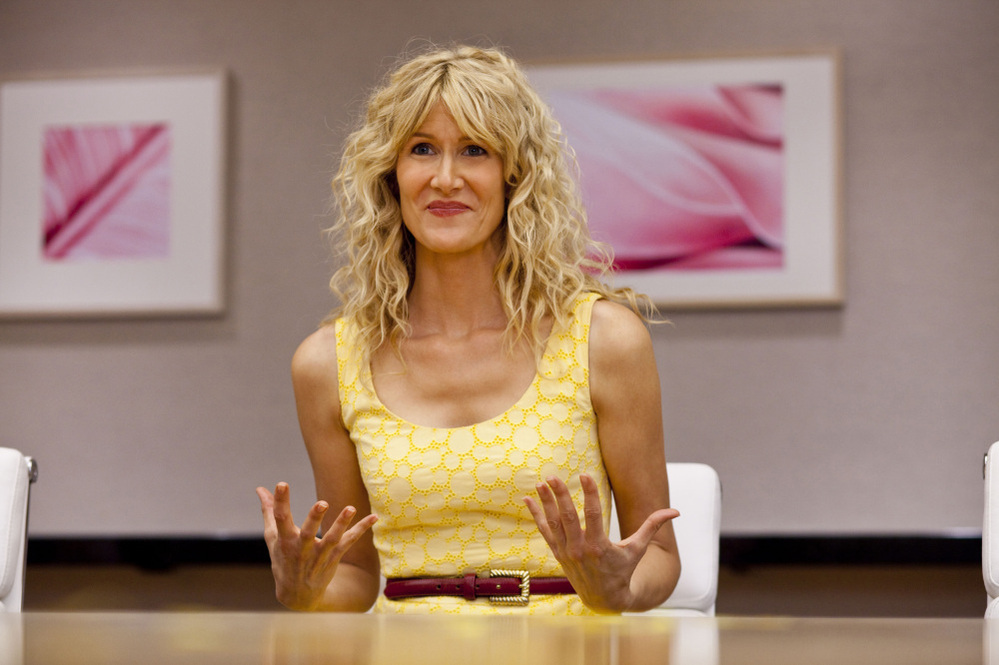
Laura Dern is Amy Jellicoe, a health and beauty executive who returns from a post-meltdown retreat to pick up the pieces of her broken life in the HBO series Enlightened.

HBO Laura Dern is Amy Jellicoe, a health and beauty executive who returns from a post-meltdown retreat to pick up the pieces of her broken life in the HBO series Enlightened. Laura Dern is Amy Jellicoe, a health and beauty executive who returns from a post-meltdown retreat to pick up the pieces of her broken life in the HBO series Enlightened.
HBO

Laura Dern and series creator Mike White, shown together on the set of Enlightened, first worked together on White's 2007 film Year of the Dog.

Prashant Gupta/HBO Laura Dern and series creator Mike White, shown together on the set of Enlightened, first worked together on White's 2007 film Year of the Dog.
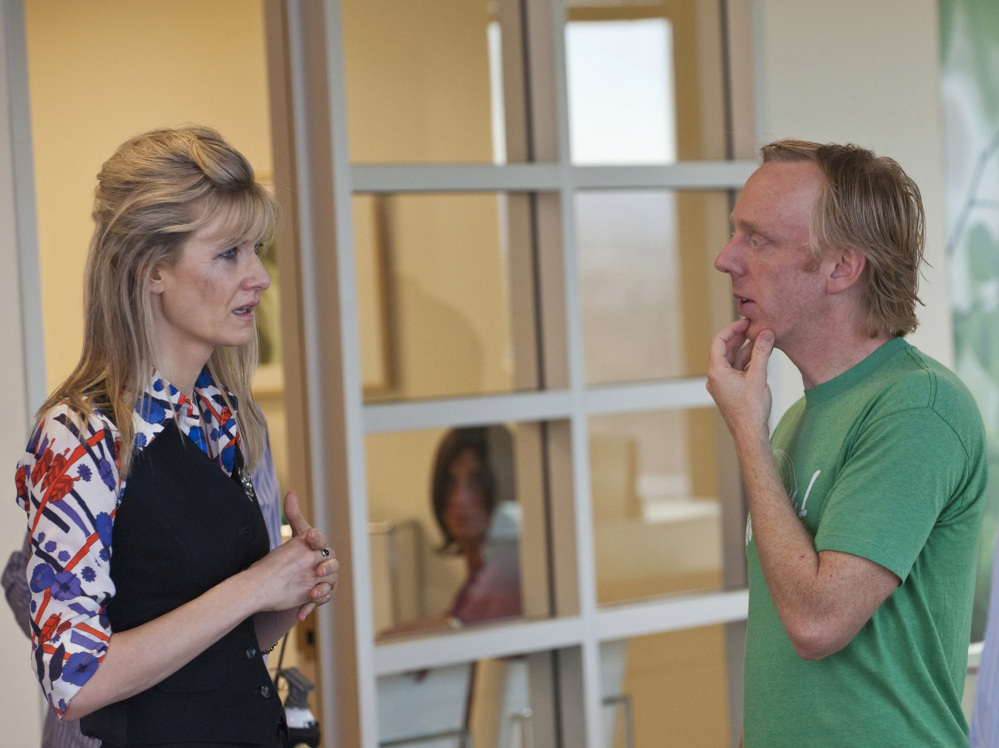
Laura Dern and series creator Mike White, shown together on the set of Enlightened, first worked together on White's 2007 film Year of the Dog.

Prashant Gupta/HBO

This interview was originally broadcast on October 10, 2011.

Can people really change? That's the question Laura Dern and Mike White ask in their HBO series Enlightened, the second season of which begins Jan. 13. The show features Dern as Amy Jellicoe, an ambitious executive who has a nervous breakdown at her workplace. She goes to a rehabilitation center in Hawaii, where she experiences an awakening.

When Amy returns home, she wants to put her new philosophy into practice — meditating, communicating better with her mother (Diane Ladd), and fostering a healthier relationship with her ex-husband (Luke Wilson). But she finds her lessons of enlightenment being put to the test.

Show creator Mike White wrote the series and also directed some of the episodes. White and Dern join Fresh Air's Terry Gross for a conversation about Enlightened.

On the difficulties of meditating, and the challenge of creating a TV show about meditation

White: "From my experience, meditating can bring up the most stressful thoughts. ... To actually try to stop that constant chatter of, 'I need to do this, I need to do that ... this is what's wrong with me.' I think that's the hardest thing for many people to do, especially in our modern, achievement-oriented [environment].

"Everyone is running so manic, and what's interesting, too, is when we turned in the show, the more quiet, meditative aspects of the show made HBO the most nervous. Because people, especially in TV, first they want their comedies funny, and they want their dramas juicy and kind of operative, and this is very internal.

"Especially these moments Amy has when she's going inside and where it slows down a little bit, I think that that's just something in general that makes a network executive worry that you're going to lose your audience, and people are going to click off or change the channel. That's not what people are looking for when they're zoning out in front of the TV."

On whether people can really change

White: "I think there are certain ways that people are always themselves, but I do think people change. I feel like that is the hopefulness I think the show tries to get at. ... That's a big question both Laura and I have discussed throughout the entire shooting and writing of the show, you know ... how enlightened is Amy? If she's just a fraud ... and in the end .... hasn't really grown, then I think it is a cynical show. I feel like we're all human and nobody's perfect, and we're all sort of fumbling toward something better. But if we don't believe that we can change or get over ourselves, it's a pretty depressing resolution."

Dern: "Mike so beautifully writes about incremental growth, and I think so many film writers want to tackle this enormous growth where this villain becomes a hero in the hour and a half that we have with them. In the long form of this season, Mike has this opportunity of Amy having this longing for growth, and longing for some form of self-acceptance. ... So there's this complicated and elusive journey toward growth that she takes."

On the carefully calibrated tone of the show

White: "When HBO came to me, and when Laura and I started talking about a show together, I liked the idea of somebody who had come to the edge and then wanted to come back and get over themselves. We see the comic, flawed aspects of [Amy's] quest to be enlightened. But at the same time, if it was just a satire, taking her enterprise very cynically, I just think it would be an easy target, and it wouldn't be a show — it would be a skit or something. The tone of the show blends some of the wryness, which I naturally bring to writing stuff ... but also, there's a real sincerity to it."

View the original article here

Thursday, 20 December 2012

Elixirs Made To Fight Malaria Still Shine On The Modern Bar

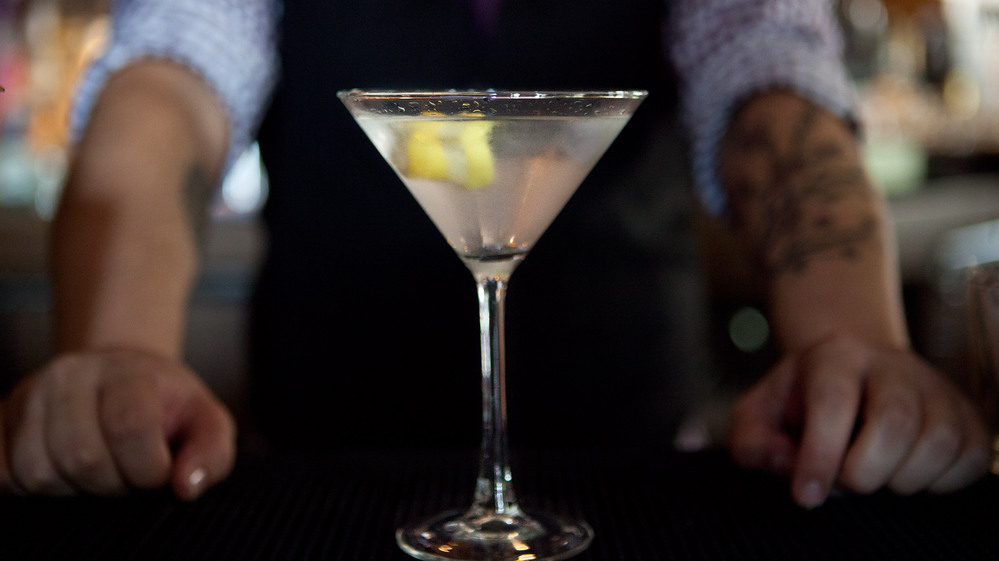
Shaken with splash of malaria drug, please. The original James Bond martini is made with gin, vodka and Kina Lillet, a French aperitif wine flavored with a smidge of the anti-malaria drug quinine.

Karen Castillo Farfan/NPR Shaken with splash of malaria drug, please. The original James Bond martini is made with gin, vodka and Kina Lillet, a French aperitif wine flavored with a smidge of the anti-malaria drug quinine. Shaken with splash of malaria drug, please. The original James Bond martini is made with gin, vodka and Kina Lillet, a French aperitif wine flavored with a smidge of the anti-malaria drug quinine.

Karen Castillo Farfan/NPR

This week, our colleagues over at the Shots blog have been talking a lot about malaria. And, here at The Salt, that got us thinking about one thing: gin and tonics.

As you probably know, tonic is simply carbonated water mixed with quinine, a bitter compound that just happens to cure a malaria infection, albeit not so well.

Turns out, gin and tonics aren't the only drinks with ties to the feverish disease. If you're sipping an absinthe cocktail or an Italian aperitif this holiday season, chances are you're also imbibing a bit of malaria's history.

Many modern day liqueurs like Campari and Pimm's contain quinine. And absinthe –- that anise-flavored spirit with a nasty reputation –- also has a history with malaria.

Absinthe gets its bitter flavor and alleged psychedelic properties from wormwood, a shrub that's been around since the dinosaurs. Coincidentally, the most powerful malaria drug we have today also comes from a type of wormwood found in China. More on that later.

Dubonnet is a French liqueur made wine, herbs and quinine. Joseph Dubonnet concocted the beverage as way to make troops take their malaria medication.

Dubonnet is a French liqueur made wine, herbs and quinine. Joseph Dubonnet concocted the beverage as way to make troops take their malaria medication.

Jules Chéret /Wikimedia Commons

So how in the heck did all these malaria drugs get mixed in with our mixology?

Let's start with the classic: quinine. The bitter compound comes from the bark of the cinchona tree (pronounced sin-KO-neh) in the Andes Mountains of South America.

It's unknown who discovered the fever-curing properties of the cinchona bark, but according to the Kew Royalty Botanical Gardens, Jesuit missionaries figured it out by about 1650, and soon it became the front-line defense for malaria in Europe (which at the time was treated with all kinds of barbaric approaches, like limb amputations and bloodletting).

By the late 1800s, the Dutch were growing the cinchona tree on the island of Java in Indonesia to meet the high-demand for quinine back in Europe, where monks and pharmacists were using the bark to make medicinal tonics.

"Herb liqueurs all started this way," says Amy Stewart, the author of a forthcoming book, The Drunken Botanist, and a specialist in horticulture.

"Apothecaries would soak the herbs and wood in alcohol to extract out the active ingredients and preserve them," she tells The Salt. "Then you add a little bit of sugar to make it taste better, and you have a liqueur."

Stewart says pharmacist and chemists were making concoctions like this for just about every ailment: stomach aches, constipation, kidney stones and even alcohol-induced liver failure.

For malaria, they'd simply add cinchona to the elixirs.

Some of these quinine-spiked liqueurs are still around today, and the malaria drug gives them a characteristic bitter flavor.

There's Lillet, a French aperitif that goes into James Bond's famous martini: "Three parts of Gordon's gin to one part vodka and a half measure of Kina Lillet," he says in Casino Royale.

There's the Italian Cocchi Americano, which is an essential component of the Corpse Reviver, one of the first cocktails designed to cure a hangover.

And, then there's Dubonnet — a sweet, quinine-flavored aperitif beloved by both the Queen Mother and Queen Elizabeth II. And, in the movie The Way We Were, Barbara Streisand drank Dubonnet over ice as Katie Morosky.

Often mistaken as an ad for absinthe, this 1906 poster actually promotes Maruin Quina, a French aperitif made with white wine infused with cherries, citrus and quinine.

Often mistaken as an ad for absinthe, this 1906 poster actually promotes Maruin Quina, a French aperitif made with white wine infused with cherries, citrus and quinine.

Painting by Leonetto Cappiello/Wikimedia Commons

Dubonnet also shares historical roots with the gin and tonic. They were both concocted as a way to get soldiers to take their malaria medication. Dubonnet helped French troops in North Africa get their quinine while British officers in India cut its bitter taste with gin, carbonated water and twist of lime.

So what about absinthe?

While Europeans and South Americans were messing around with cinchona and quinine, the Chinese had an even more powerful malaria drug up their sleeve —or should we say, in their tea cup.

According to a commentary in the British Journal of Clinical Pharmacology, traditional Chinese doctors have been treating malaria with a tea made from sweet wormwood, or qinghao, for thousands of years. They'd soak the shrub in water and then wring it out to extract the active ingredients.

The New York Times explained earlier this year how this herbal remedy become a modern-day malaria drug.

In the 1960s, Chairman Mao wanted a magic bullet to stop malaria among his troops in North Vietnam. So he enlisted top scientists to find a new malaria drug from herbs used in traditional Chinese medicine.

It took 14 years and over 50 scientists, McNeil says, but finally the scientists isolated a potent anti-malarial compound from sweet wormwood. It's called artemisinin, and we still use it today.

But a note of caution — artemisinin isn't found in the European wormwood used in absinthe, so a drink of that liqueur wouldn't help with a malaria infection.


View the original article here