Showing posts with label Perfect. Show all posts

Friday, 21 December 2012

A Pie-Making Encore: Start With The Perfect Recipe, Serve With Love

The foundation of a good pie starts with the crust.

iStockphoto.com The foundation of a good pie starts with the crust. The foundation of a good pie starts with the crust.
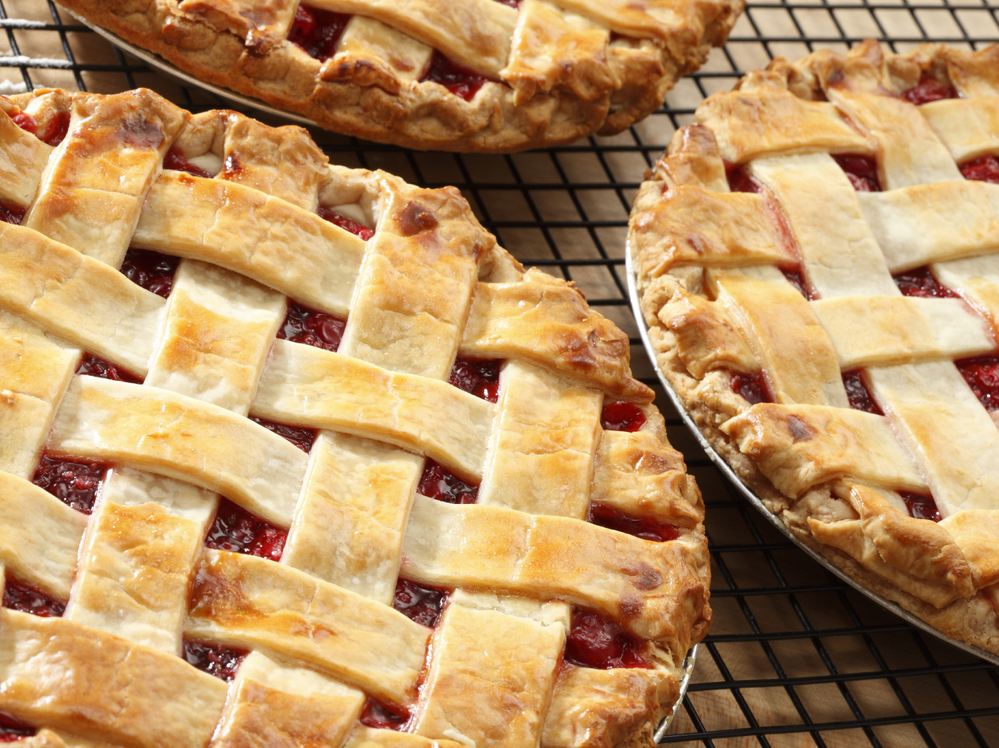
iStockphoto.com

It's high season for pie-making. And when we came upon this touching story about a bunch of women gathering to bake fresh apple pies for the people of Newtown, Conn., it warmed our hearts here at The Salt. Truly.

We agree, there is great comfort in baking. And amen to blogger Suzi Banks Baum, who — longing to reach out to the grief-stricken community of Newtown — served up kindness as part of a pie mission.

Earlier this year, I overcame my fear of making pie, and in doing so I grew closer to my mom and the memory of my beloved grandmother.

So, if you're planning to bake this week, I bid you to put away the rush of the holidays and try to move, as Banks Baum wrote, "at the Pace of Pie."

Here's a bit from the story I wrote back in July, when I took a pie-making class at the Culinary Institute of America, the nation's premier cooking school, in Hyde Park, N.Y. There I learned the foolproof pie crust formula that chef George Higgins teaches his students. "It starts with 3, 2, 1," he explains.

That's 3 parts flour, 2 parts fat (butter), 1 part liquid. We've laid it out for you in pictures here, to make it easy. And we also share his family's impossible-to-resist blueberry pie recipe that is made with a flaky crust.

But it takes just a bit more than that.

Higgins says a successful baker likes precision. So be sure to measure accurately. Then, of course, there's the technique.

The biggest mistake I made — and this is a pitfall for lots of newbies — was overworking the dough. Higgins made me toss out my first attempt and start over! Less is more. Higgins taught me to handle it just enough to form the dough into a ball. (Kneading is for bread, not pie crust!) It's supposed to look like it's barely holding together.

Here are some other pastry chefs' tips to avoid disaster:

Your butter should be firm, cold and chunky. Ryan Westover, the pastry chef at Poste in Washington, D.C., explains that the chunks of cold butter will slowly release steam as the pie bakes. And this is important: "By releasing steam incrementally, you give the starches and gluten time to form a lattice, or a sort of balloon," he says. And this holds the steam in.

This is how a good pie crust develops its rich, delicate layers of wonderful texture and flavor, Westover says.

Additional temperature tips come from Theresa Souther, a pastry chef and head of the Professional Pastry Arts Program at L'Academie de Cuisine, a culinary school in Bethesda, Md.

She recommends putting ingredients, including the flour, in the refrigerator or freezer for 30 to 60 minutes before you begin.

And be sure to use ice water to mix the dough. "Cold temperatures help minimize gluten development," she explains. And if you have too much gluten, you end up with a chewy, rubbery crust.

Also, she says, let the dough rest in the fridge after you mix it and before you try to roll it and shape the pie. Cold dough is usually easier to roll and handle.


View the original article here

A Pie-Making Encore: Start With The Perfect Recipe, Serve With Love

The foundation of a good pie starts with the crust.

iStockphoto.com The foundation of a good pie starts with the crust. The foundation of a good pie starts with the crust.

iStockphoto.com

It's high season for pie-making. And when we came upon this touching story about a bunch of women gathering to bake fresh apple pies for the people of Newtown, Conn., it warmed our hearts here at The Salt. Truly.

We agree, there is great comfort in baking. And amen to blogger Suzi Banks Baum, who — longing to reach out to the grief-stricken community of Newtown — served up kindness as part of a pie mission.

Earlier this year, I overcame my fear of making pie, and in doing so I grew closer to my mom and the memory of my beloved grandmother.

So, if you're planning to bake this week, I bid you to put away the rush of the holidays and try to move, as Banks Baum wrote, "at the Pace of Pie."

Here's a bit from the story I wrote back in July, when I took a pie-making class at the Culinary Institute of America, the nation's premier cooking school, in Hyde Park, N.Y. There I learned the foolproof pie crust formula that chef George Higgins teaches his students. "It starts with 3, 2, 1," he explains.

That's 3 parts flour, 2 parts fat (butter), 1 part liquid. We've laid it out for you in pictures here, to make it easy. And we also share his family's impossible-to-resist blueberry pie recipe that is made with a flaky crust.

But it takes just a bit more than that.

Higgins says a successful baker likes precision. So be sure to measure accurately. Then, of course, there's the technique.

The biggest mistake I made — and this is a pitfall for lots of newbies — was overworking the dough. Higgins made me toss out my first attempt and start over! Less is more. Higgins taught me to handle it just enough to form the dough into a ball. (Kneading is for bread, not pie crust!) It's supposed to look like it's barely holding together.

Here are some other pastry chefs' tips to avoid disaster:

Your butter should be firm, cold and chunky. Ryan Westover, the pastry chef at Poste in Washington, D.C., explains that the chunks of cold butter will slowly release steam as the pie bakes. And this is important: "By releasing steam incrementally, you give the starches and gluten time to form a lattice, or a sort of balloon," he says. And this holds the steam in.

This is how a good pie crust develops its rich, delicate layers of wonderful texture and flavor, Westover says.

Additional temperature tips come from Theresa Souther, a pastry chef and head of the Professional Pastry Arts Program at L'Academie de Cuisine, a culinary school in Bethesda, Md.

She recommends putting ingredients, including the flour, in the refrigerator or freezer for 30 to 60 minutes before you begin.

And be sure to use ice water to mix the dough. "Cold temperatures help minimize gluten development," she explains. And if you have too much gluten, you end up with a chewy, rubbery crust.

Also, she says, let the dough rest in the fridge after you mix it and before you try to roll it and shape the pie. Cold dough is usually easier to roll and handle.


View the original article here

Thursday, 20 December 2012

In Search Of The Perfect Egg

Just as there are purebred dogs and purebred horses, there is also purebred poultry. Since its founding in 1877, the Poultry Club of Great Britain has been the main organization in the U.K. dedicated to safeguarding "all pure and traditional breeds" of chicken, ducks, geese and turkey.

And, much like the American Kennel Club's national competition, the Poultry Club also hosts a national show where breeders can enter their best eggs into the club's annual contest in November.

So what makes an egg a national award winner?

Toddy Hamilton-Gould, the Poultry Club's spokesperson, says the winning eggs have an even color, a symmetrical shape and and a strong, smooth shell with no blemishes.

This year's winner, shown above, came from a Silkie hen, a Chinese breed known for having feathers that look almost like fur.

Hamilton-Gould emphasizes that the eggs are not judged on their taste. The Poultry Club wants to find eggs that are good for hatching chicks, she says, not for making an omelet. (But they sure look like they could do both.)

The club brings in judges, such as domestic waterfowl breeder Graham Hicks, shown above, to determine the winners.

In addition to being judged on shell shape and color, the eggs are split open using a pen knife to inspect their contents. Hamilton-Gould says the judges are looking for a fresh, firm yolk with a layered white and, obviously, no blood spots.

There's also a category for best decorated egg. This year's winner, shown below depicting an African goose, ready for its close up, was submitted by Sally Barnett.


View the original article here