Sunday, 30 December 2012

'Tabu': Virtuoso Style Heightens Romance

An old man recalls a love affair from his youth in Tabu.

An old man recalls a love affair from his youth in Tabu.

Adopt Films

Tabu

Director: Miguel GomesGenre: DramaRunning time: 118 minutes

Not rated

In Portuguese with subtitles

With: Teresa Madruga, Laura Soveral, Ana Moreira

(Recommended)

Revolution can spring from the most personal acts. In Tabu, Portuguese writer-director Miguel Gomes spins a two-part tale examining love, loneliness and the power of memory. It starts in the present day but culminates at the start of the Portuguese Colonial War in 1961. The personal and the political are so hopelessly entangled that even the midcentury colonizers who populate the film's dazzling metafictional second half can't avoid influencing events — even when they are very much disengaged from colonial politics.

Before Gomes gets to the early '60s story that takes place at the foot of the fictional African mountain that gives the movie its name, he frames that story with a tale of present-day Lisbon. It concentrates on the middle-aged, unmarried Pilar (Teresa Madruga) and her relationship with her increasingly unhinged neighbor Aurora (Laura Soveral) and Aurora's maid, Santa (Isabel Munoz Cardoso). Aurora regularly gambles away her allowance from her absent daughter, and in the days surrounding New Year's, she claims Santa is holding her prisoner and practicing witchcraft, and in the end begins babbling about crocodiles on her deathbed.

Pilar is spending the holidays alone, as a Czech exchange student she was to house bailed on her during a deadpan scene of deception in the airport that's as sad as it is darkly funny. Pilar spends time with an artist friend, cries as he snores next to her in a movie theater, and is eventually drawn into Aurora's unfolding drama, as Santa sends her on Aurora's deathbed errand to find an old friend. That friend is a man named Ventura (Henrique EspĂ­rito Santo), who ends up relating to Pilar the romantic story of his past connection to Aurora.

Tabu is in black and white and presented in the boxy old academy aspect ratio of early cinema (the film shares a title with F.W. Murnau's final film, from 1931). And when the timeline shifts back 50 years for Ventura to tell his story, Gomes delves further into antiquated filmmaking techniques, making it into a semi-silent movie. Background noise remains but dialogue is inaudible, and the only words spoken aloud are Ventura's poetic remembrances of the affair he carried on with Aurora while she was pregnant with her husband's child.

Santa (Isabel Cardoso) cares for an elderly woman as she slips into delusions, seeing her as a hunter, among other things.

Adopt Films Santa (Isabel Cardoso) cares for an elderly woman as she slips into delusions, seeing her as a hunter, among other things. Santa (Isabel Cardoso) cares for an elderly woman as she slips into delusions, seeing her as a hunter, among other things.
Adopt Films

This romanticism matches up with the passions of their affair, but Gomes is also interested in increasing the self-consciousness of the filmmaking and throws multiple devices at the viewer to highlight the artificiality of the storytelling as a means to truth. There are absurdist touches like a hunt for a mysterious beast, which when caught appears to be invisible in its cage. As the young Aurora and Ventura (Ana Moreira and Caroloto Cotta) imagine animal shapes in the clouds, Gomes superimposes drawings of the animals over their clouds. When Ventura's band plays the songs that give them a ticket out of Africa, the audio is old Phil Spector songs played by other bands — The Ramones in one scene, Malagasy vocal group Les Surfs in another.

Despite the distancing techniques, Tabu never feels academic or theoretical. Though we don't hear the young Aurora and Ventura speak, it's difficult not to get caught up in their romance. Even more impressively, Gomes sets their story against the backdrop of the colonial setting; the interchangeability of the black characters, who work mainly as servants and guides, is a statement itself on the way in which European colonizers took their territories and the indigenous people who lived in these places entirely for granted. The tensions simmering in the background eventually come together in an intersection that's both tragic and necessary, for both the impending revolution and the future of the two lovers. Few films are this smart about subtly couching their allegorical aspirations within more straightforward narratives; fewer still are able to do so with such energetically inventive virtuoso style. (Recommended)

View the original article here

In Rapid-Fire 2012, Memes' Half-Life Fell To A Quarter

A screengrab from the "Kony 2012" online video about the Central African warlord Joseph Kony, which skyrocketed in popularity after its release in March. It was criticized, then forgotten, just as quickly.

via YouTube A screengrab from the "Kony 2012" online video about the Central African warlord Joseph Kony, which skyrocketed in popularity after its release in March. It was criticized, then forgotten, just as quickly. A screengrab from the "Kony 2012" online video about the Central African warlord Joseph Kony, which skyrocketed in popularity after its release in March. It was criticized, then forgotten, just as quickly.

via YouTube

Last June, a young woman in Texas uploaded a Justin Bieber fan video. She seemed a little .... unhinged.

"I just made a list [of] all our future kids names: Bartholemew, Clarence, Steven, Bryce," she sings, eyes wide.

The video was posted to Reddit in a thread called "Overly Attached Girlfriend." In 48 hours, it picked up over 1 million views. Within days, the media was running stories about it.

"JB Fan Video" got more than 1 million views in 48 hours. Within weeks, it was largely forgotten.

via YouTube "JB Fan Video" got more than 1 million views in 48 hours. Within weeks, it was largely forgotten. "JB Fan Video" got more than 1 million views in 48 hours. Within weeks, it was largely forgotten.

via YouTube

And in a few weeks, everyone forgot about it.

Online sensations like "JB Fan Video" used to have longer legs. But in the past year, the speed with which we cycle through online videos, games and memes has increased enormously.

Wildly Popular ... Briefly

Back in 2008, "Charlie Bit My Finger," a video of a tiny British boy sticking his fingers in his baby brother's mouth, first uploaded to YouTube in 2007, was passed around for months and months ... and months ... and months.

YouTube's trends manager, Kevin Allocca, says it's hard to imagine its popularity lasting so long today.

"That stuff definitely still exists," Allocca says, "but a lot of the most popular things that we're seeing now [are] from professionals at producing entertainment."

And this year, videos dropped in and out of our consciousness faster. Even Allocca — whose job it is to watch trends on YouTube — says, "the speed with which these things happen doesn't cease to amaze me."

It wasn't just lighthearted stuff capturing our momentary attention this year. A video about the central African warlord Joseph Kony started showing up on Facebook and Twitter in March. It took only a few days for "Kony 2012" to obliterate previous YouTube records, with 30 million views a day.

But the backlash came faster, too. Between criticism and controversy, Kony 2012 basically vanished from the cultural conversation within a month.

HDCYT/YouTube

Then: First uploaded in 2007, "Charlie Bit My Finger" was a worldwide sensation for months on end.

invisiblechildreninc/YouTube

Now: In contrast, "Kony 2012" quickly smashed YouTube viewing records — but soon vanished from the cultural conversation.

"It really made me think about the velocity with which we're operating right now," Allocca says. "And the pace of popularity for some of these videos."

Flying By At Warp Speed

And it's not just videos that became online flashes in the pan in 2012, either. Just a couple of years ago, there were 32 million people playing Farmville on Facebook. They happily sent each other online cabbages and watered each other's crops.

It took two years for the vast majority of players to lose interest. When this year's version of Farmville came out, it took only three months for the number of players to fall from a high of 7 million to around 2 million.

Accelerating the pace of linking and "poking" might actually be an efficient way to "be a more social person in today's world," says sociologist Marco Gonzales. We are intensely social animals, he says, hardwired to get pleasure from connecting online.

"We're actually looking to be more social than ever before," Gonzales adds. "Maybe to the point of a problem, right? "

Maybe. Remember "Binders Full of Women"? Or Olympic gymnast Mckayla Maroney scowling with her medal? With these things flying by at warp speed, it's hard to keep up with the cultural conversation.

People cry and moan a lot about the decreasing attention span of America's youth," says Shana Naomi Krochmal, a digital producer for Current TV. "I think everyone's attention span in American is, at the best, quartered from where it was even five years ago. Absolutely."

Call it the quartering of the half-life. Krochmal thinks it's happened, in part, because of the strain on old media in a 24-hour news cycle. Memes are cool. They're plucked up, chewed on, spat out and forgotten.

"I think the kind of media we have now does really reward that intense instant obsessive focus," Krochmal says. "But how long can you do that for, right?"

The Smartphone Factor

In a burgeoning online universe, not so long. This year, Facebook topped 1 billion users. With more of us from all over the world using the same social media — and using it better and faster — that means ever-more information to pass around. Of course, that also means some of it won't go away.

Things like "Gangnam Style," the catchy — and relatively long-running — pop song, tend to stick around if they're interactive or something people can copy or remix.

The proliferation of mobile phones has played a role, too. Social media used to be limited to computers, but 2012 was the year that more than 50 percent of American consumers owned smartphones, giving us Twitter and Facebook right in our pockets.

"Our access the Internet has just improved so dramatically over the last few years," says Andy Borowitz, a comedian who has worked successfully in both old and new media. "We didn't have so much high speed Wi-Fi five years ago. We didn't have high speed networks on our phones the way we have now."

Borowitz says, personally, he's exhausted by the rapid-fire firehose of information he gets on Twitter and Facebook. So in the year ahead, he's planning to read more books. It's balm, he says, for his over-stimulated brain.


View the original article here

Short Stories To Savor On A Winter Weekend

Nishant Choksi Short Stories

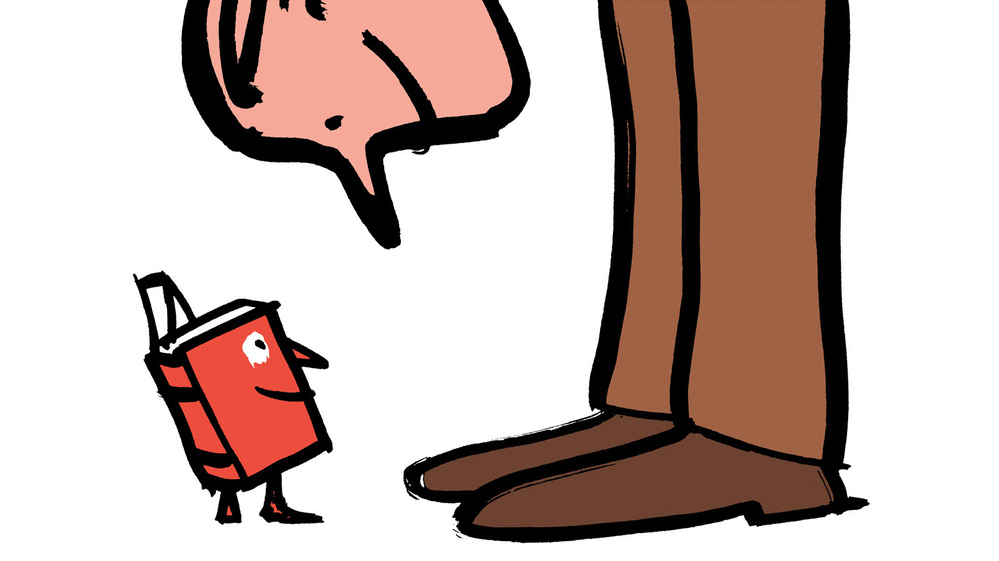
Hortense Calisher, a virtuoso of the form, once called the short story "an apocalypse in a teacup." It's a definition that suits the remarkable stories published this year by three literary superstars, and two dazzling newcomers with voices so distinctive we're likely to be hearing from them again. These stories are intense, evocative delights to be devoured singly when you have only a sliver of time, or savored in batches, at leisure, on a winter weekend.

As a lagniappe, begin with Object Lessons, a pairing of 20 contemporary authors with 20 potent classics from the pages of The Paris Review. Among them: Dave Eggers on "Bangkok"; James Salter's time bomb of a love-gone-bitter story; and Aleksandar Hemon on Jorge Luis Borges' cosmic "Funes, the Memorious," about a man cursed with the inability to forget anything.

Then move on to these five, my best collections of 2012:

Blasphemy

A mix of new and older stories, spanning 20 years of work by Sherman Alexie, a master storyteller who has been honored with numerous awards. Alexie is constantly experimenting with form, but he never forgets to be funny. He laces his incisive observations about race, class, gender, sex, infidelity, and Indian and non-Indian bigotry with biting wit. Standouts among the older stories: "Indian Country," which opens with a noted Coeur d'Alene author arriving in Montana to learn he's been jilted by a Navajo woman, and "War Dances," the story of a 41-year-old undergoing MRIs and steroid treatments for sudden deafness, which probes a still-painful father-son connection. New stories include the raucous "Midnight Basketball," in which one teammate disses Obama's jump shot, and "Cry Cry Cry," which begins, "Forget crack, my cousin, Junior, said, meth is the new war dancer," and takes the cousins through to Junior's brutal end. These are stories that provoke and illuminate.

What We Talk About When We Talk About Anne Frank

This second collection won the Frank O'Connor International Short Story Award, one of the world's richest prizes for the short story form — and the title story is a stunner. Yes, it's a homage to short story wizard Raymond Carver's classic (substituting "Anne Frank" for "Love"), but the subtleties and wit are Nathan Englander's own. What seems at first to be an ordinary reunion between two high school girlfriends, now married, ends up exploring questions of Jewish identity, Israeli politics, intermarriage and the Holocaust.

Englander's lineage reaches back to Bernard Malamud, Saul Bellow and Philip Roth, but he's less interior, more likely to give us pages of sparkling dialogue than reams of mulling over this or that. He has a natural sense of drama (a play he's written, based on an earlier story, "The Twenty-Seventh Man," opened at New York's Public Theater in November). And his relaxed storytelling voice makes this collection feel intimate, even when he's writing about Israeli history from the Yom Kippur War to today in "Two Hills," which focuses on two matriarchs of the settlement movement, or following the cross-country ramblings of a traveling writer whose crowds have dwindled down to every author's nightmare, a single demented fan who insists he read to him alone.

The Doctor's Wife

This collection is made up of 91 little chunks of flash fiction — a form that seems ideally suited to our fragmented times (think short, easily absorbed texts like NPR's Three Minute Fictions). Taken all together, they form a finely etched autobiographical portrait of a family that spans 50 years, and three generations.

At its heart: a woman whose life unfolds within a household role limited by her times. The character called simply "the Doctor's Wife" is a 1950s-era wife and mother living in a small town near Seattle. She cooks for her finicky family, does laundry daily, volunteers for community projects, and oversees her outdoorsy brood — Bob, Ann and Petrea, who calls herself Chrissie until she is college age. Watching helplessly as her fourth child, John, begins wasting away from a mysterious ailment, she "makes housekeeping into an art." Luis Jaramillo's combination of irony, tenderness, and restraint brings to mind Evan Connell's iconic portrait of Kansas City's Mrs. Bridge. As he explores how John's death as a toddler carries emotional echoes into the next generation, Jaramillo surprises us with miniature explosions like this, titled "In Contrast:"

"I was only depressed for, like, 40 years," Petrea says to me.

"Because of John?"

"Because of John."

Dear Life

For decades, the internationally lauded Alice Munro's stories have proven to be dependable pleasures, unparalleled for emotional nuance and depth. This collection, her 13th, includes 10 traditional short stories and four "almost stories" that are intentionally autobiographical, a first for Munro.

She often starts her stories abruptly — "At that time we were living beside a gravel pit," she writes in the haunting story "Gravel," in which that pit figures in a traumatizing childhood tragedy. "Amundsen" begins, "On the bench outside the station I sat and waited," and moves into an idiosyncratic story of thwarted early love set in a wartime TB sanitarium. The kick of Munro's work is, in part, its unpredictability. She interrupts herself, loops back to a chronological beginning, throws in strange images and oddities, and often ends with a sleight of hand that changes the meaning of a story altogether.

Reading "Dear Life" and the three other autobiographical stories, it's tempting to draw connections between Munro's life and her fiction. In these four she reveals the vivid memory for early-childhood moments and the sort of fraught mother-daughter relationship she often examines in her stories. When she describes her growing sense of separation from her mother's point of view, and how over time she began to understand her own inner self, we catch glimpses of the writer-in-the-making. It's a rare insight into a writer's life, and, along with these other recent stories, a treasure for Munro fans.

Battleborn

Claire Vaye Watkins' father, who died when she was 6, was a member of the Charles Manson family who escaped the cult to settle in the Mojave. In 10 stories set in her home state of Nevada (dubbed the "Battle Born" state because it was founded during the Civil War), she takes an unflinching look at the apocalyptic. She writes of a mother's suicide, a father's unnatural love for his daughter, a nuclear test blast that "sends the curse southeast, toward Las Vegas, to my mother's small chest, her lungs and her heart." She describes raw and arid landscapes around Reno, Virginia City, Black Rock and a brothel in Pahrump, where an Italian tourist holes up while waiting to learn if a friend lost in the desert has died. In her opening story, "Ghosts, Cowboys," she reckons with her own heritage, giving us artfully crafted sections on the founding of Reno during the Gold Rush era, the Spahn Ranch where 1950s Westerns were filmed, and her parents' "toxic and silver-gilded love." "And there is still so much I'll never know, no matter how much history I weigh upon myself," she writes.

Watkins has a survivor's gift for identifying the crucial detail, and she's a straight shooter. Each story from this talented writer is wired to detonate.


View the original article here

Matt Damon On His Promising New Film

Steve (Matt Damon), a salesman for a large oil company, visits a small town in which he hopes to buy drilling rights.

Steve (Matt Damon), a salesman for a large oil company, visits a small town in which he hopes to buy drilling rights.

Scott Green/Focus Features

Matt Damon has played Jason Bourne, the brainwashed assassin. He won an Oscar for co-writing the screenplay for Good Will Hunting with Ben Affleck. And now he's returned to the writer's chair for his latest film — Promised Land.

Damon plays Steve Butler, a salesman who comes to a small Pennsylvania town to sell the local farmers on allowing his company to drill on their land for natural gas using a controversial process known as fracking.

Matt Damon speaks with Linda Wertheimer about the experience of writing the film — as well as the possibility of another Bourne movie.

On why he made a movie about fracking

"The issue came later. We wanted to make a movie about American identity and where we are in the country right now and where we've come from and where we're headed. And in researching different things, this was the best issue to kind of explore those themes. 'Cause it's highly divisive and people feel incredibly strongly on both sides of the issue, and so it was a great way to explore kind of how we make decisions. Do we do it individually or as communities? And how are we thinking? Are we thinking in short term or are we thinking about the long term?"

On writing about a controversial topic

While in town, Steve meets Alice (Rosemarie DeWitt).

Scott Green/Focus Features While in town, Steve meets Alice (Rosemarie DeWitt). While in town, Steve meets Alice (Rosemarie DeWitt).

Scott Green/Focus Features

"For us it was really about the characters and in writing it, we loved every single one of these characters. The screenplay and the movie is not supposed to judge any of these people. These are people who are in tough situations and are making tough choices. And — and that's a reflection of what's really going on. When we were in Western Pennsylvania and the first day we were shooting, a couple farmers came up and said, 'Hey, you guys making a movie about fracking. Don't say anything bad about it, we really need that.' And then a couple of other people came up and said, 'Hey are you making a movie about fracking? Don't say anything good about it, you know, it's poisoning the waters, it's, you know, poisoning the air. It's terrible.' And this is all in the same community in Western Pennsylvania. So people are quite savvy about it."

On his character in the film

"Essentially at the beginning of the movie, he's a guy who's pro-industry. He grew up in a farming community that basically went under when the industry left town."

"He sees himself as a realist and he feels like he's helping these people, he's saving them, he's bringing them back. And then, in the second act, he basically starts to get fracked, you know, emotionally, through these interactions with all these people. And by the end — he's not an environmentalist at the end, it's not that movie, you know — he basically takes a stand for democracy."

On the possibility of another Bourne movie

"I would absolutely love to do another one. I mean, we just, we just don't have a story. And if we had a story, we could do it. But what happens in those movies, and what happens a lot of times in Hollywood on big movies, is you get a release date before you have a script. [...] And the last movie was like that."

"We've always had this deal that we won't make another one unless we honestly feel it has a shot to be as good as the other three, as if it belongs in that family. I care about it too much."


View the original article here

Peter Parker's Dead, But Spider-Man Will Live On (Sort Of)

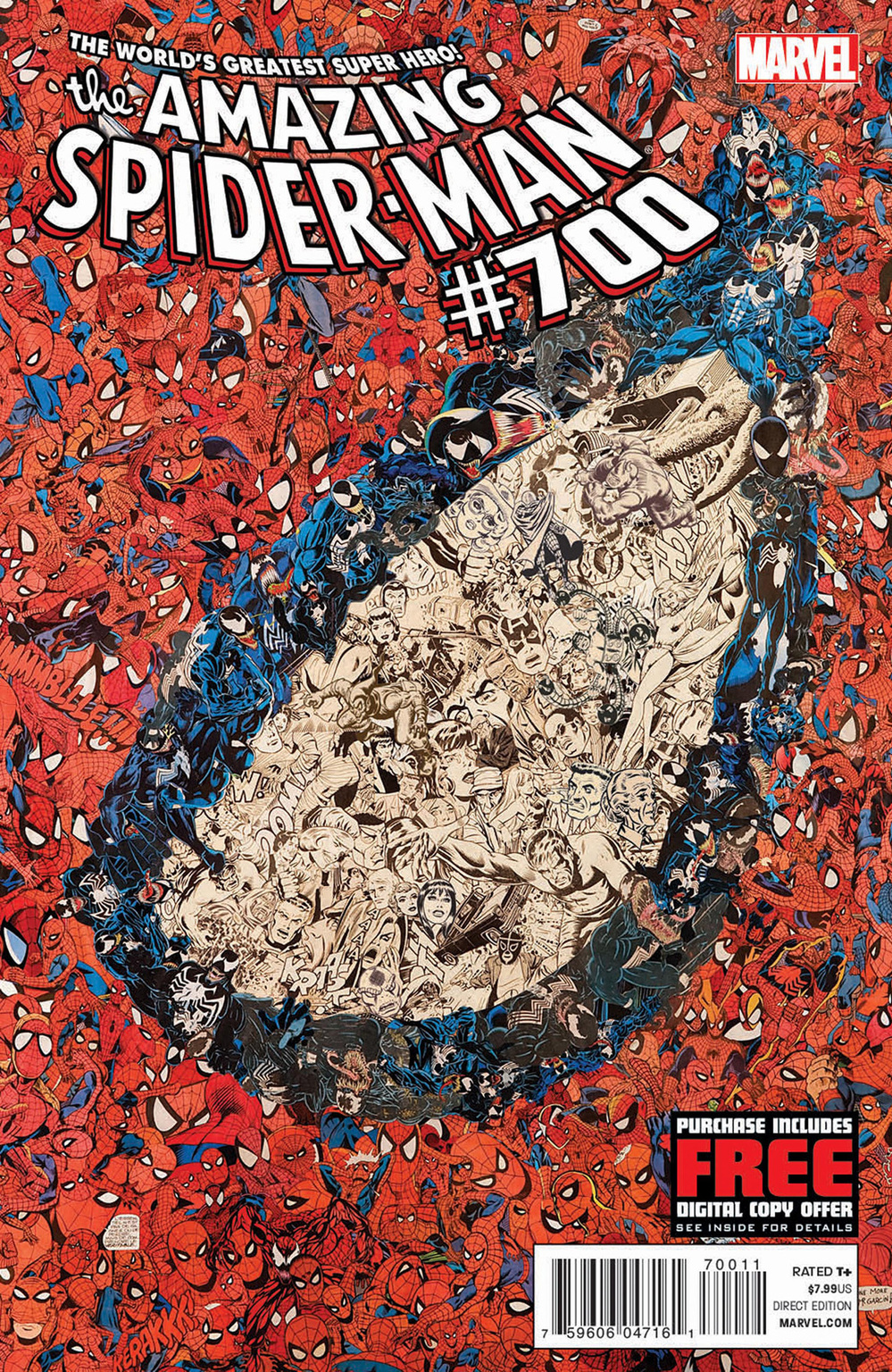
All good things must come to an end, and so it is with Marvel Comics' web-slinging, wise-cracking superhero. Spider-Man is no more. Well, to be more precise, Peter Parker is no more.

In the 700th and final issue of The Amazing Spider-Man, writer Dan Slott's controversial story saw Spider-Man's mind switched with that of his dying arch-foe Dr. Otto Octavius, aka Doctor Octopus. The twist is that with his final effort, Spidey was able to give all of his memories and morals to his body-stealing enemy.

The Amazing Spider-Man #700 is the final issue of the series.

AP/Marvel Comics The Amazing Spider-Man #700 is the final issue of the series. The Amazing Spider-Man #700 is the final issue of the series.

AP/Marvel Comics

For all intents and purposes, however, Spider-Man as we know him is dead. Slott explained to Weekend Edition Saturday guest host Linda Wertheimer why Doctor Octopus was the right person to "become" Spider-Man.

"Doc Ock is on some level the shadow Peter Parker," Slott says. "Peter Parker ... was very resentful of all of his peers. [But] it was the ethics and things that Aunt May and Uncle Ben taught Peter that in the end made him a hero."

"With great power comes great responsibility," Uncle Ben famously told Peter, setting him off on his path for justice and duty.

In his formative years, Doctor Octopus was a similarly bespectacled nerd and outcast, much like Peter. Not having those moral guideposts following his own radioactive accident that turned him into an analog of an eight-legged creature, he adopted the path of the villain instead.

Slott's storyline now gives him a second chance. Doctor Octopus, now in the body of Spider-Man but imbued with Parker's "great responsibility," renounces his evil ways and vows to become a better, nay, a "superior Spider-Man!"

"He kind of realizes that he wasted his life on villainy," Slott says.

When word of the story started to spread, Internet Spidey senses began tingling and even prompted death threats against Slott. To Wired Magazine, he joked he was going to have to pull a "Salman Rushdie" when the issue came out.

But Slott says there's also been mix of positive reaction as well.

"There's a lot of people that realize that over 50 years of Spider-Man, that some of the best stories involve loss," he says.

Slott says that when Stan Lee and Steve Ditko created Spider-Man in the 1960s, they created a hero who was like us and who "made mistakes all the time." The loss of Peter Parker, in a way, is just the furthering of the story of Spider-Man's vulnerabilities.

Real loss in comic books is pretty rare, however, and many major characters, including Captain America, Superman and Batman have all been "killed" before, only to return some time later. The comic book death has become a bit of a genre trope.

So if history is any indication, we might not have seen the last of Peter Parker — he just might return as an alien, a robot or perhaps even a version of himself from the future.

Peter might have come to an amazing ending, but Superior Spider-Man goes on sale in January, starring the villain-formerly-known-as-Doctor-Octopus as Spider-Man.


View the original article here

Change Is The Only Constant In Today's Publishing Industry

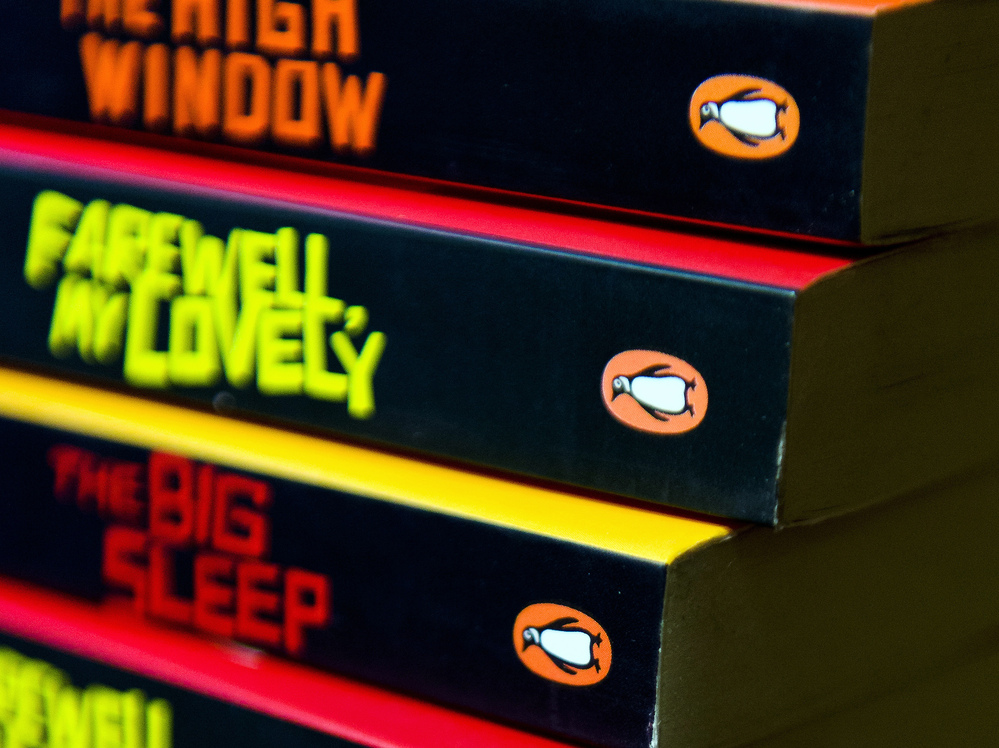
Penguin and Random House, two of the biggest players in publishing, announced in October that they would merge.

AFP/AFP/Getty Images Penguin and Random House, two of the biggest players in publishing, announced in October that they would merge. Penguin and Random House, two of the biggest players in publishing, announced in October that they would merge.

AFP/AFP/Getty Images

The publishing industry has been in flux for years. First chain stores, then Amazon, then e-books — many forces have combined to create dramatic change in the traditional publishing model.

Mike Shatzkin is the founder and CEO of the publishing industry consulting firm Idea Logical. He says one of the biggest changes happening in publishing right now is the planned merger of two of the biggest players in the field, Penguin and Random House — with whispers of further mergers to come.

Already, there's a lot of debate about what that kind of consolidation will mean for the industry. Shatzkin tells NPR's Audie Cornish that the size of the merged company will give it the clout — and the backlist — to create book sales anywhere it wants to. Even the corner drugstore might have a real bookstore — filled, of course, exclusively with Penguin and Random House titles, not just a rack of pulp paperbacks.

"Another way they might create additional distribution is through a subscription, e-book subscription service," he says. "Before Random and Penguin merged, no single publisher would have had enough of the most commercial titles to make something like that work. They might. So they may be able to create distribution channels that are extra, compared to what we have now, and proprietary, in that other publishers won't be able to get at them."

Digital platforms are another big trend right now — websites where authors can publish their work and connect with their readers. Shatzkin says children's publishers have been making good use of platforms. "For example, Scholastic, which has fabulous reach into schools, through teachers, is creating an e-book reading platform called Storia," he says.

Storia will be a complete environment, providing services for the purchase and reading of e-books and tools for parents and teachers to oversee their kids' reading. "So if a parent or teacher get a kid reading on Storia, you're not going to be able to get a book to that kid except through Storia. And Storia's not the only platform of its kind ... and what that means is that power transfers to the platform owner from the individual title or author."

But what about the readers who don't want to sign up with a platform to get their favorite authors? "I think we've already had that experience," Shatzkin says. "Twenty years ago, much more than today, there were people that chose their books from what Book-of-the-Month Club offered them. And Book-of-the-Month Club did not offer them books that were Literary Guild main selections, because they didn't have rights to them. And in fact, in a more subtle way, people shop from what's inside a bookstore. What's inside a bookstore is a small percentage of the total number of books available."


View the original article here

Let's Double Down On A Superstorm Of Malarkey: Picking 2012's Word Of The Year

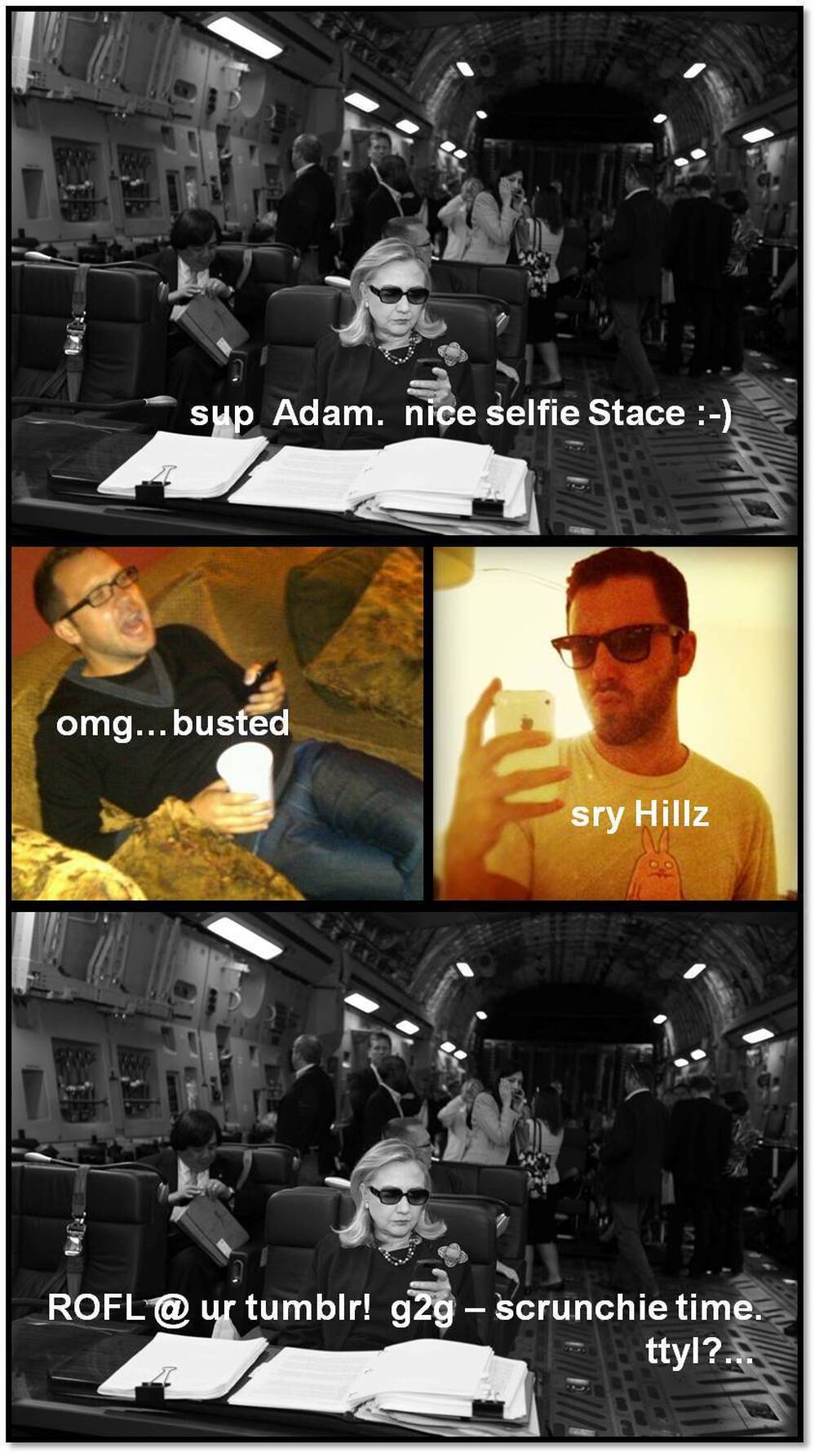
Selfie, one of the candidates for 2012's Word of the Year, means a self-portrait photograph, usually posted to a social networking site.

textsfromhillaryclinton.tumblr.com/Original image by Diana Walker for Time Selfie, one of the candidates for 2012's Word of the Year, means a self-portrait photograph, usually posted to a social networking site. Selfie, one of the candidates for 2012's Word of the Year, means a self-portrait photograph, usually posted to a social networking site.

textsfromhillaryclinton.tumblr.com/Original image by Diana Walker for Time

There is a major decision coming up that will truly define the year 2012. Yes, it's almost time for the American Dialect Society to once again vote on the Word of the Year. Will it be selfie? Hate-watching? Superstorm? Double down? Fiscal cliff? Or (shudder) YOLO?

Ben Zimmer is a language columnist for the Boston Globe, and the chair of the ADS's New Words Committee. He tells NPR's Renee Montagne that the Word of the Year can be either a word or a phrase, as long as it's achieved new prominence in 2012. "You might have heard about YOLO, the acronym for 'you only live once.' YOLO caught on this year as a bit of youth slang that young people are already a little sick of."

A selfie is a self-portrait photograph, usually posted to a social networking site — and used most memorably by Secretary of State Hillary Clinton (or, let's be honest, one of her aides) in a humorous message to the Texts from Hillary Tumblr account. "Another word that I was introduced to this year which I quite like, hate-watching, which describes the masochistic act of continuing to watch a TV show even if you hate it."

And of course there were the old-fashioned words that resurfaced this year, like malarkey, popularized by Vice President Joe Biden in a debate with Paul Ryan. "That's a great Irish-American word that's been around for about a century ... it's such a great evocative word and it grabbed people's interest," Zimmer says. "It turns out it was Irish-American newspaper writers who popularized it in the early 20th century."

Some words captured public attention for sadder reasons, like superstorm, coined to describe Hurricane Sandy. "Someone from the National Weather Service actually suggested Frankenstorm, because it was a hybrid of different weather systems, like Frankenstein's monster, and it was also going to hit around Halloween," Zimmer says. But many news organizations considered Frankenstorm too light-hearted in the wake of the disaster, so the consensus settled on superstorm.

Last year, the concepts of the one percent and the 99 percent were on everyone's mind — giving rise, in a way, to this year's prominent percentage: 47. "If you think about the impact of last year's Occupy movement, the idea of breaking the population into percentages based on some sort of economic factor was powerful," Zimmer says. When Mitt Romney was caught on tape decrying 47 percent of the American electorate as "dependent on government," he adds, that became "a real touchstone of the election."

Gambling metaphors were also big this year, particularly doubling down, a high-risk, high-reward play in blackjack, which can be used in either positive or negative ways — such as when former President Bill Clinton described Romney as someone who will "double down on trickle-down" economics.

There's no clear front-runner among all these choices, Zimmer says. "Last year, I think it was pretty obvious going in that Occupy was the prohibitive favorite. Certainly, the term fiscal cliff has been used a lot in the last few months, and that could end up being the winner, in the same way that, for instance, bailout was the winner for the American Dialect Society four years ago. It could be coming from pop culture, or the tech world — there's a lot of possible choices this year."


View the original article here