Sunday, 30 December 2012

E-Books Destroying Traditional Publishing? The Story's Not That Simple

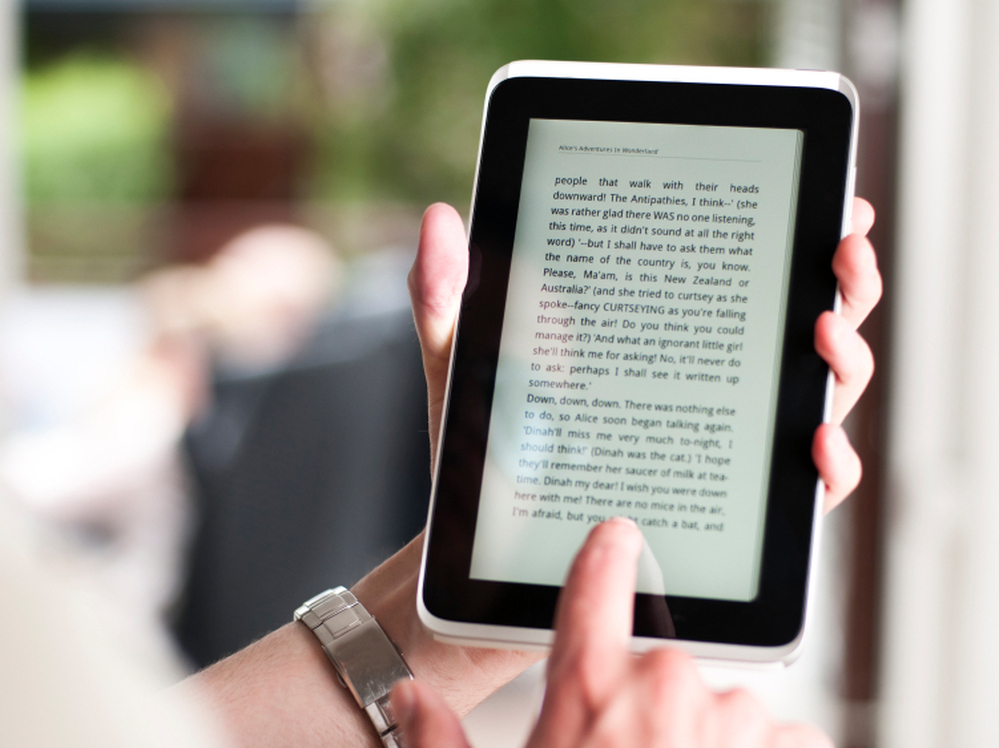
Publishers are finding that flexible pricing on e-books can help bring in new readers.

iStockphoto.com Publishers are finding that flexible pricing on e-books can help bring in new readers. Publishers are finding that flexible pricing on e-books can help bring in new readers.
iStockphoto.com

What counts as a book these days, in a world of Kindles, Nooks and iPads — and eager talk about new platforms and distribution methods?

Traditional publishers are traveling a long and confusing road into the digital future. To begin with, here's the conventional wisdom about publishing: E-books are destroying the business model.

People expect them to be cheaper than physical books, and that drives down prices. But the story's not that simple. For one thing, digital publishers have the same problem that record labels do: piracy. And there's just not the same stigma attached to pirating an e-book as there is to holding up a Barnes & Noble.

It turns out, though, that some publishers are doing pretty well despite the piracy problem. "We've had an incredible year," says Sourcebooks President Dominique Raccah. "Last year was the best year in the company's history. This year we beat that, which I didn't think was even possible." Raccah adds that her company is doing well because of digital publishing, not in spite of it. "It's been an amazing ride," she says.

It turns out there are some huge advantages — at least for publishers. A big one: The price of an e-book isn't fixed the way it is with physical books. Ten years ago, a publisher would have sent out its books to the bookstore with the price stamped on the cover. After that, it was done — the publisher couldn't put it on sale to sell more books.

"The exciting thing about digital books is that we actually get to test and price differently," Raccah says. "We can even price on a weekly basis." Once publishers have this tool, the ability to adjust prices in an instant, they can do whatever they want with that tool — like use it to get publicity. That's what Little, Brown did with presidential historian Robert Dallek's book on John F. Kennedy, An Unfinished Life.

In the middle of November, Little, Brown dropped the price from $9.99 to $2.99 for 24 hours — the digital equivalent of a one-day-only sale. "That sparks sales; it gets people talking about it," says Terry Adams, a publisher with Little, Brown. "You've just expanded the market."

Dropping the price of An Unfinished Life did get people's attention. "Here, we had an opportunity to increase the audience," Adams says. The book — originally published in 2003 — launched itself back onto the best-seller list. And because Little, Brown could raise the price again, it wasn't stuck with a money loser.

This kind of promotion leads to discovery, something that used to just happen in brick and mortar bookstores. But with fewer of those around, publishers are using price to create discovery. It's like making music available for streaming, so that someone will discover an artist and buy a record.

And speaking of music, if you read the new e-book 40 Years of Queen, you'll find it full of links. Links to iTunes, where you can buy the music you've been reading about. That's another huge advantage of e-books: Publishers can sell you things inside your book. It's still quite rare, but that's where digital publishing is headed.

But enough with the good news. There's still one big problem putting pressure on publishers (besides thieves). A problem you may have noticed, actually, just in the past day or so.

"We actually don't have a good gifting tradition yet for e-books," says Sourcebooks' Raccah. Despite all the advances in reading technology, physical books are still the best Christmas presents.

View the original article here

Thursday, 27 December 2012

Adding Some Shine To Your Holiday Manners

America's increasingly diverse society is rewriting many of the traditional rules of etiquette. Host Michel Martin gets tips from etiquette experts Harriette Cole, Phillip Galanes, and social commentator Firoozeh Dumas.


View the original article here

HBO's 'Enlightened' Take On Modern Meditation

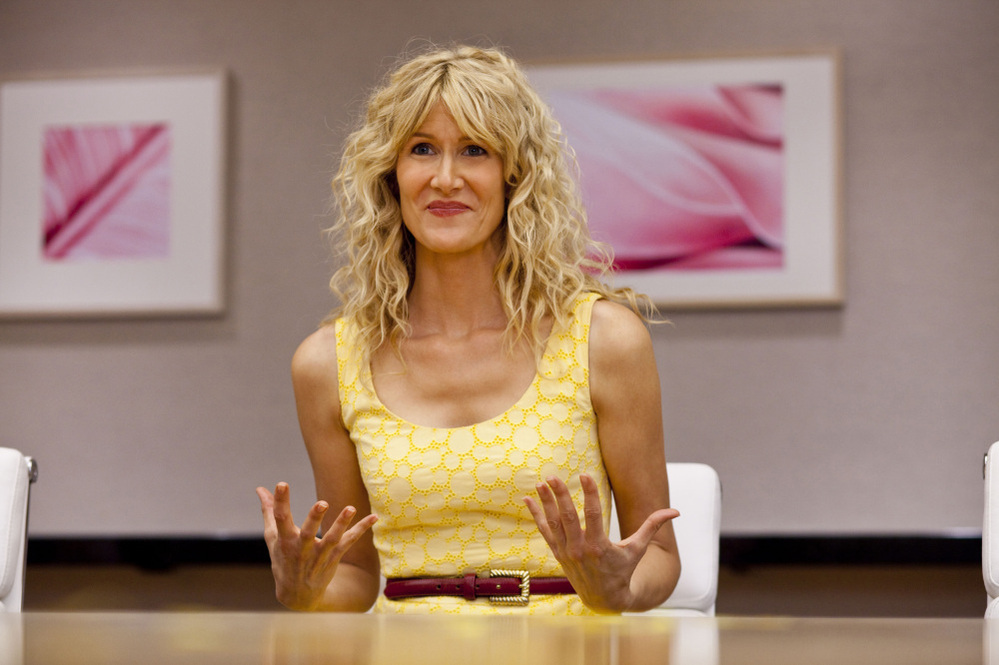
Laura Dern is Amy Jellicoe, a health and beauty executive who returns from a post-meltdown retreat to pick up the pieces of her broken life in the HBO series Enlightened.

HBO Laura Dern is Amy Jellicoe, a health and beauty executive who returns from a post-meltdown retreat to pick up the pieces of her broken life in the HBO series Enlightened. Laura Dern is Amy Jellicoe, a health and beauty executive who returns from a post-meltdown retreat to pick up the pieces of her broken life in the HBO series Enlightened.

HBO

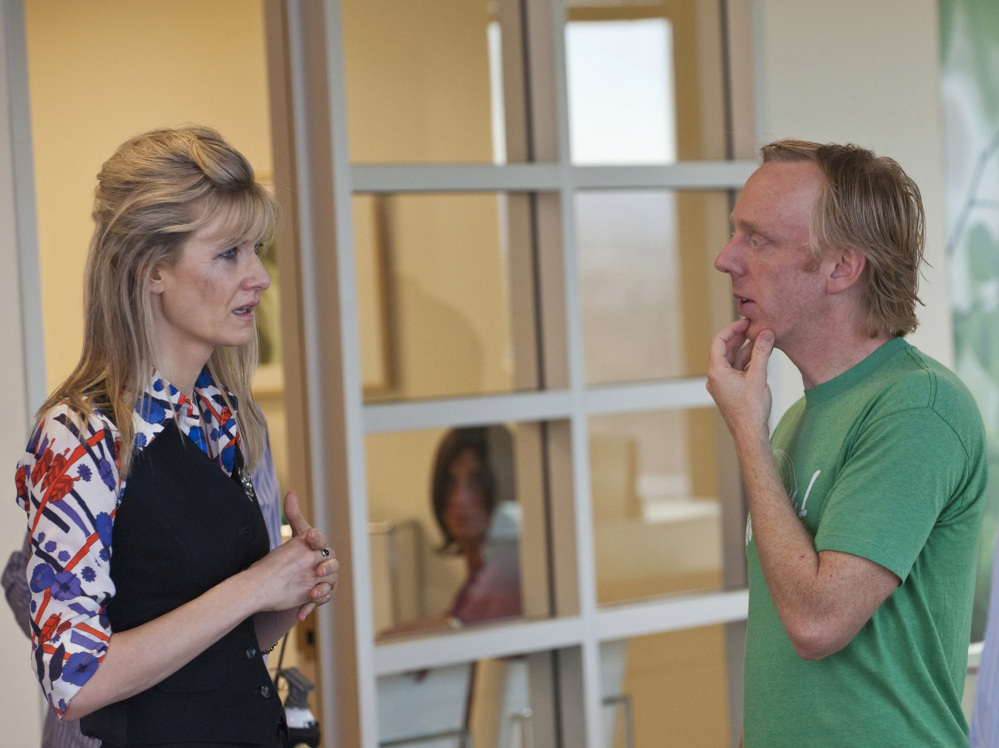
Laura Dern and series creator Mike White, shown together on the set of Enlightened, first worked together on White's 2007 film Year of the Dog.

Prashant Gupta/HBO Laura Dern and series creator Mike White, shown together on the set of Enlightened, first worked together on White's 2007 film Year of the Dog.

Laura Dern and series creator Mike White, shown together on the set of Enlightened, first worked together on White's 2007 film Year of the Dog.

Prashant Gupta/HBO

This interview was originally broadcast on October 10, 2011.

Can people really change? That's the question Laura Dern and Mike White ask in their HBO series Enlightened, the second season of which begins Jan. 13. The show features Dern as Amy Jellicoe, an ambitious executive who has a nervous breakdown at her workplace. She goes to a rehabilitation center in Hawaii, where she experiences an awakening.

When Amy returns home, she wants to put her new philosophy into practice — meditating, communicating better with her mother (Diane Ladd), and fostering a healthier relationship with her ex-husband (Luke Wilson). But she finds her lessons of enlightenment being put to the test.

Show creator Mike White wrote the series and also directed some of the episodes. White and Dern join Fresh Air's Terry Gross for a conversation about Enlightened.

On the difficulties of meditating, and the challenge of creating a TV show about meditation

White: "From my experience, meditating can bring up the most stressful thoughts. ... To actually try to stop that constant chatter of, 'I need to do this, I need to do that ... this is what's wrong with me.' I think that's the hardest thing for many people to do, especially in our modern, achievement-oriented [environment].

"Everyone is running so manic, and what's interesting, too, is when we turned in the show, the more quiet, meditative aspects of the show made HBO the most nervous. Because people, especially in TV, first they want their comedies funny, and they want their dramas juicy and kind of operative, and this is very internal.

"Especially these moments Amy has when she's going inside and where it slows down a little bit, I think that that's just something in general that makes a network executive worry that you're going to lose your audience, and people are going to click off or change the channel. That's not what people are looking for when they're zoning out in front of the TV."

On whether people can really change

White: "I think there are certain ways that people are always themselves, but I do think people change. I feel like that is the hopefulness I think the show tries to get at. ... That's a big question both Laura and I have discussed throughout the entire shooting and writing of the show, you know ... how enlightened is Amy? If she's just a fraud ... and in the end .... hasn't really grown, then I think it is a cynical show. I feel like we're all human and nobody's perfect, and we're all sort of fumbling toward something better. But if we don't believe that we can change or get over ourselves, it's a pretty depressing resolution."

Dern: "Mike so beautifully writes about incremental growth, and I think so many film writers want to tackle this enormous growth where this villain becomes a hero in the hour and a half that we have with them. In the long form of this season, Mike has this opportunity of Amy having this longing for growth, and longing for some form of self-acceptance. ... So there's this complicated and elusive journey toward growth that she takes."

On the carefully calibrated tone of the show

White: "When HBO came to me, and when Laura and I started talking about a show together, I liked the idea of somebody who had come to the edge and then wanted to come back and get over themselves. We see the comic, flawed aspects of [Amy's] quest to be enlightened. But at the same time, if it was just a satire, taking her enterprise very cynically, I just think it would be an easy target, and it wouldn't be a show — it would be a skit or something. The tone of the show blends some of the wryness, which I naturally bring to writing stuff ... but also, there's a real sincerity to it."


View the original article here

Friday, 21 December 2012

Blame The Movies As We Mourn? Or Turn To Them For Comfort?

After a classroom tragedy, the title character of Monsieur Lazhar (played by the Algerian actor Fellag) comforts mourning students.

After a classroom tragedy, the title character of Monsieur Lazhar (played by the Algerian actor Fellag) comforts mourning students.

Music Box Films

In light of last Friday's mass shooting at Sandy Hook Elementary School, all explanations and ruminations for why Adam Lanza opened fire are on the cable-news pundits' table. Was it the lack of gun control? Untreated mental illness? Or was it an Aurora-style pop-culture revenge fantasy writ large? Did Hollywood's culture of raging, gun-slinging entertainment help fuel the mayhem? Nobody knows the shooter's motive, and yet the conversation and pontification remains incessant and unabated.

The entertainment industry has made no sweeping admission of guilt, nor has it been asked to do as much by the victims' families or by legislators. But this week's canceled red-carpet premieres and earnest offerings of song on shows like Saturday Night Live and The Voice do point to some soul-searching on the part of our entertainers.

On Wednesday's All Things Considered, NPR's Mandalit del Barco reported on how Hollywood often pulls back after mass shootings, postponing release dates and adding new warning labels to crime procedurals. But as Mandalit reported, studio executives rarely ask more fundamental questions about the ethics of selling violence as entertainment. From Quentin Tarantino's slavery-revenge saga Django Unchained to Katherine Bigelow's critically acclaimed Zero Dark Thirty, some of this season's highest-profile releases offer their greatest rewards in the form of stylized violence.

But if filmmakers can glorify (and perhaps inspire) brutality, can't they also offer us the opposite — an outlet for reflection and healing following an act of brutality?

Monsieur Lazhar is one such example. It was released earlier this year, nominated for an Oscar, and in its limited release cycle was most certainly lost in the pop-culture grinder. I discovered it by accident over the weekend, avoiding the too-sad news stream by browsing through Netflix's somewhat limited online library. I couldn't have predicted that this quiet, meditative film is actually an eerily prophetic and immensely relevant story — especially in the aftermath of the tragedy at Sandy Hook.

The film charts one year at an elementary school in Montreal, where the quiet students at the center of the film are carrying immensely turbulent and traumatic pain under their stoic demeanor. Their beloved teacher has committed suicide; they discover her hanging body over their school desks.

It's not an inviting plot device for a work of entertainment, but for filmmaker Philippe Falardeau it's a window to explore the complex relationship between children and violence, teachers and students — and, more important, between pain and healing.

The title character is an Algerian immigrant who enters the story as a man in search of work and relevance. Monsieur Lazhar replaces the deceased teacher and gradually discovers that the other adults at the school have remained cold and distant from their students' pain. The classroom has been painted afresh, the belongings of their teacher stored far from view, and yet it's obvious that the students never grieved.

Against the advice of his superiors to avoid discussing the suicide, Monsieur Lazhar insists the students explore it in their work and in their friendships. Of course what the audience learns through the course of the film is that beyond the classroom, the soft-spoken Bachir Lazhar is recovering from his own pain. He's the sole survivor of a brutal attack on his family in Algeria, an asylum-seeker searching for a new beginning in the Canadian winter. In that fascinating intersection across cultures, the film explores how the pain of varying individuals can meet and transform into something redemptive and beautiful.

Monsieur Lazhar is just one film in the hundreds that lit up movie screens this year. But in the current debate over the correlation between pop culture and violence, it's another bit of evidence of the power of cinema — of art — as catharsis. It's a quiet reminder that for every filmmaker who traffics in the theater of violence, there are those whose work we need to help us make sense of the senseless.


View the original article here

Last-Minute Box Sets: Home Video For Everyone On Your List

The cover of Quentin Tarantino XX.

If you're running out of time for holiday shopping and you can't stand to buy another gift card, there's still hope.

Over the last few holiday shopping seasons, I've become something of a specialist in hunting down specific DVD and Blu-ray sets that will most appeal to friends and family on my list. I usually have a pretty good inkling of these things: My sister gets the art-house movies. My uncle gets the old-school sitcoms. My nephew gets anything that involves baseball, superheroes and/or ice road truckers (don't ask).

When giving the gift of home video, the key is to find something with a little shelf life – collections that can be returned to time and time again. You also want material you just can't get anywhere else. Below are 10 suggestions for gift items across a range of genres and prices. Each features original material or bonus extras that you can't find online or via the various modes of digital distribution. The prices listed are approximate retail costs, though it pays to shop around – you can often find specific sales online and off. But if you're ordering online and you've got a tight deadline, don't wait: the window for Monday deliveries is about to close.

The cover of Quentin Tarantino XX.

(Blu-ray, $70, 10 discs)

Packed with extras, this 8-disc set collects the seven feature-length films Tarantino has directed – Reservoir Dogs, Pulp Fiction, Jackie Brown, Kill Bill Vol. 1, Kill Bill Vol. 2, Death Proof and Inglourious Basterds – plus the excellent True Romance, based on Tarantino's screenplay. You get the bonus materials from all previous DVD iterations, plus two discs of new features and retrospectives. Tarantino's many co-conspirators tell some great stories here, especially John Travolta and Samuel L. Jackson, who aren't afraid to give specifics and name names.

The cover of World Series: History Of The Fall Classic.

(DVD, $30, 4 discs)

Major League Baseball is notoriously protective of its video archives, "express written consent" and all that. As such, these official DVD sets are the only place to get material from the vaults; you can't find this stuff on YouTube. The 4-disc History focuses on baseball's annual championship game and it digs deep, all the way back to the first World Series in 1903. If you have a San Francisco fan on your list, you might also consider the recently released 2012 World Series Collector's Edition (DVD, $70, 8 discs). Important safety tip: Do not give this to a Detroit Tigers fan.

The cover of All In The Family: The Complete Series.

(DVD, $180, 28 discs)

A good option for pop culture scholars, this generous set collects all 213 episodes of the groundbreaking television series, along with two documentaries, alternate pilot episodes and a new interview with creator Norman Lear. Family was a huge victory for ambitious artists over cautious network execs, and it paved the way for our current bounty of smart and sophisticated TV shows. Or it can just be enjoyed as a very funny sitcom. The various extras demonstrate how much thought and energy went into the endeavor. Highly recommended.

The cover of Coppola.

(Blu-ray, $30, 5 discs)

This lean, mean set packages Apocalypse Now and the director's cut Apocalypse Now Redux with three more Coppola films – Tetro, The Conversation and One From The Heart. While all the films here have been issued in various formats before, this is a great price for five Blu-ray titles and each film comes with its own set of extras – interviews, behind-the-scenes features, deleted scenes and mini-documentaries. It's also a chance to see the very underrated Tetro, Coppola's most confessional and personal film.

The cover of The Rolling Stones - Charlie Is My Darling.

(DVD/Blu-ray, $75, multimedia box set)

For the discerning Rolling Stones fanatic, this fascinating tour film flew under the radar a bit among all the other 50th-anniversary hoopla this year. The film chronicles the boys on an early sprint through Ireland, and it's like a time machine back to an era when rock and roll was still sexy and dangerous. How young they look! The film is available on single-disc DVD or Blu-ray for under $20, or the box set adds two bonus CDs, a 40-page booklet, a replica poster and a 10" vinyl record. (Younger readers may need to Google that last term.)

The cover of Mankind: The Story Of All Of Us.

(DVD/Blu-ray, $30/$35, 3 discs)

From the team that brought you America: The Story of Us comes this rather radically expanded special subtitled The Story of All of Us. Personally, I'm a sucker for these History Channel specials and their heady mix of dramatic recreations and earnest pop scholarship. Actor Josh Brolin handles narration this time around, and the flash-forward structure of each chapter is interesting – fire leads to forge leads to bronze leads to war leads to nuclear detente. Lots of cocktail party trivia, too. For instance: Historical peoples were shorter than we are, right? Right – except for the very first homo sapien hunters, who were strong, fast and two inches taller on average. How about that.

The cover of The Carol Burnett Show: The Ultimate Collection.

(DVD, $200, 22 discs)

They really and truly don't make 'em like this anymore: Carol Burnett's groundbreaking comedy-variety show ran for more than 10 years, from 1967-1978. This mammoth box set collects 50 full episodes plus 20 hours of bonus materials including cast reunions, interviews and testimonials from literally hundreds of guest stars. It's more than a nostalgia trip; this is original source material for comedy scholars of any age. (Abridged 6-DVD and 2-DVD sets are also available.)

The cover of the Javier Bardem three-film collection.

(DVD/Blu-ray, $20/$25, 3 discs/2 discs)

In Skyfall, the latest James Bond movie, Javier Bardem delivers one of the scariest 007 villain ever – no mean trick after 50 years of Bond films. The Javier Bardem 3-Film Collection features the actor's previous freaky villain turn in No Country for Old Men, along with the Spanish-language film Mondays in the Sun and the harrowing drama Biutiful. These 3-disc collections are an interesting new trend in home video packaging, usually centering on a particular actor or film series. It's a good way to find older movies and streamline your gift-giving.

The cover of Magic School Bus: The Complete Series.

(DVD, $60, 8 discs)

Here's a TV show collection for kids you can feel good about giving, and that won't get the parents mad at you. This Emmy-winning animated series follows the intrepid bus driver Ms. Frizzle as she takes her wards on alarming field trips – under the oceans, through outer space, or into the human body – via her magic school bus. The books have been a staple of science education since the 1980s and the TV adaptations are both genuinely funny and good for kids in an eat-your-vegetables kind of way. Single disc episodes are also available, but the complete series set gathers all 52 specials, 30 of which are available here for the first time.

The cover of The Story Of Film.

(DVD, $70, 5 discs)

Film historian Mark Cousins' hugely ambitious 15-part documentary series on the history of cinema, originally broadcast last year in the UK, spans more than 100 years of movie history and covers every corner of the globe. The series has gotten rave reviews and is already being shelved among the classic scholarly reference works on film history. Odyssey is less a gift than a totally pleasurable semester-long viewing assignment. For the humbly endeavoring film student on your list, this should hit the spot.


View the original article here

Pop Culture Happy Hour: The Hobbit And The Habit Of Storing Your Stuff

A drawing of two clinking martini glasses. NPR

On this week's show, we dive into Peter Jackson's The Hobbit: An Unexpected Journey. Glen is an extra-extra-expert, Stephen and I are novices, and Trey is somewhere in between when it comes to Tolkien, so what happens when we all see the same movie? What about the super-crisp technical side? And what does this have to do with Les Miserables?

After we get past a few hobbits and other critters, we jump into something that might come up as you're thinking about New Year's resolutions: the accumulated stuff that comes with being a pop-culture aficionado. We talk about sentimentality versus convenience when it comes to hard copies and digital copies, and we consider the future of special features and commentaries as people move away from actually buying DVDs.

And as always, we close with what's making us happy this week. Glen is happy about taking just the right angle on a film I also love; Trey found his spirits lifted by an article that shed light on a bittersweet photograph that circulated this week; Stephen is happy about the anniversary of a project he loved, and I couldn't get enough of Anne Hathaway giving Matt Lauer what-for on Today.

Next week, we'll be on vacation, but we'll be posting the audio from last weekend's live show at NPR HQ, so you'll get to hear a quiz, a year-end wrap-up, and a lot of very nice people indulging us.

In the meantime, keep in touch with us — you can find us on Facebook, or follow us on Twitter: me, Trey, Glen, Stephen, Jess, and our producer emeritus and music director Mike.


View the original article here

A Pie-Making Encore: Start With The Perfect Recipe, Serve With Love

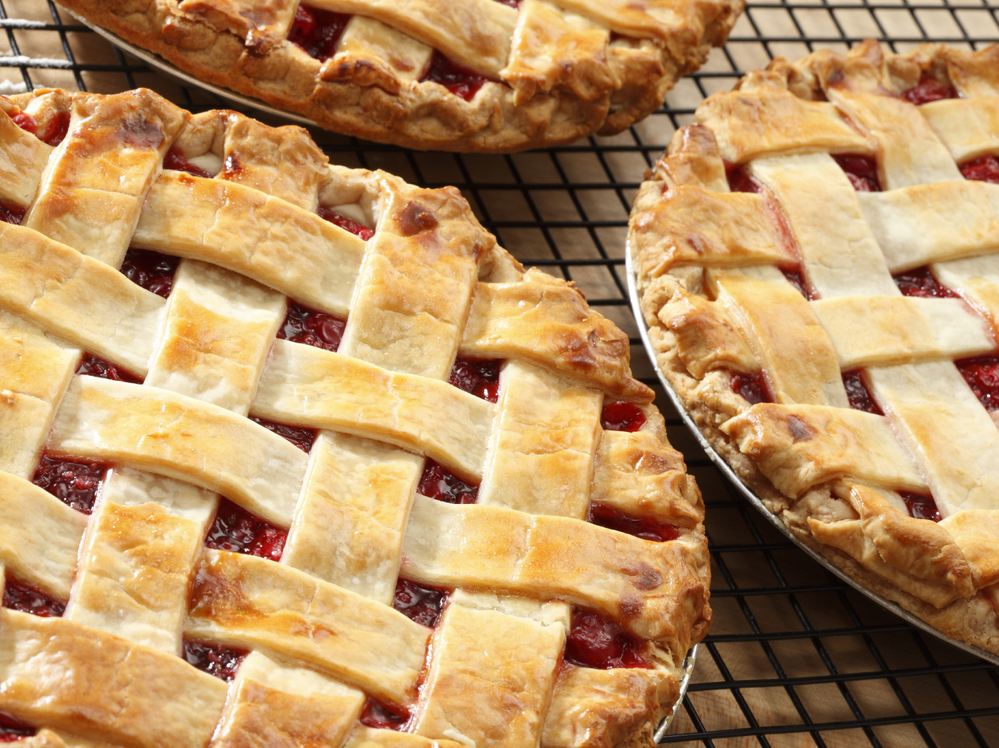
The foundation of a good pie starts with the crust.

iStockphoto.com The foundation of a good pie starts with the crust. The foundation of a good pie starts with the crust.

iStockphoto.com

It's high season for pie-making. And when we came upon this touching story about a bunch of women gathering to bake fresh apple pies for the people of Newtown, Conn., it warmed our hearts here at The Salt. Truly.

We agree, there is great comfort in baking. And amen to blogger Suzi Banks Baum, who — longing to reach out to the grief-stricken community of Newtown — served up kindness as part of a pie mission.

Earlier this year, I overcame my fear of making pie, and in doing so I grew closer to my mom and the memory of my beloved grandmother.

So, if you're planning to bake this week, I bid you to put away the rush of the holidays and try to move, as Banks Baum wrote, "at the Pace of Pie."

Here's a bit from the story I wrote back in July, when I took a pie-making class at the Culinary Institute of America, the nation's premier cooking school, in Hyde Park, N.Y. There I learned the foolproof pie crust formula that chef George Higgins teaches his students. "It starts with 3, 2, 1," he explains.

That's 3 parts flour, 2 parts fat (butter), 1 part liquid. We've laid it out for you in pictures here, to make it easy. And we also share his family's impossible-to-resist blueberry pie recipe that is made with a flaky crust.

But it takes just a bit more than that.

Higgins says a successful baker likes precision. So be sure to measure accurately. Then, of course, there's the technique.

The biggest mistake I made — and this is a pitfall for lots of newbies — was overworking the dough. Higgins made me toss out my first attempt and start over! Less is more. Higgins taught me to handle it just enough to form the dough into a ball. (Kneading is for bread, not pie crust!) It's supposed to look like it's barely holding together.

Here are some other pastry chefs' tips to avoid disaster:

Your butter should be firm, cold and chunky. Ryan Westover, the pastry chef at Poste in Washington, D.C., explains that the chunks of cold butter will slowly release steam as the pie bakes. And this is important: "By releasing steam incrementally, you give the starches and gluten time to form a lattice, or a sort of balloon," he says. And this holds the steam in.

This is how a good pie crust develops its rich, delicate layers of wonderful texture and flavor, Westover says.

Additional temperature tips come from Theresa Souther, a pastry chef and head of the Professional Pastry Arts Program at L'Academie de Cuisine, a culinary school in Bethesda, Md.

She recommends putting ingredients, including the flour, in the refrigerator or freezer for 30 to 60 minutes before you begin.

And be sure to use ice water to mix the dough. "Cold temperatures help minimize gluten development," she explains. And if you have too much gluten, you end up with a chewy, rubbery crust.

Also, she says, let the dough rest in the fridge after you mix it and before you try to roll it and shape the pie. Cold dough is usually easier to roll and handle.


View the original article here